
Actividades
“Investing in care is investing in the country: the Right to Care requires closing the gap and activating the sector’s economic potential
Traducir artículo

¿Quieres un resumen de este artículo?
-
The report “The Right to Care and the Care Economy in Spain,” presented by CENIE, proposes recognizing the Right to Care as a social right and consolidating long‑term care as the fourth pillar of the welfare state in the face of the challenge posed by an increasingly long‑lived society.
-
The research warns of a wide care gap in Spain, but it also shows the sector’s economic potential: in 2023, 10.623 billion euros in dependency benefits generated an impact of 17.260 billion on GDP; each euro allocated to dependency benefits generated around 1.6 euros of GDP impact.
-
Between 2017 and 2025, system benefits doubled and, since 2015, the so‑called “dependency limbo” was reduced by more than 70%. However, access times remain close to one year, and 72.4% of people over 65 with some limitation in their daily life, and 63.1% of those with severe limitations, do not receive effective support from the System for Autonomy and Care for Dependency (SAAD). By the end of 2025, the system served 1.61 million people.
-
Looking ahead to 2030, the study estimates that strengthening the SAAD would require increasing investment by around 0.6 percentage points of GDP, with a potential effect of nearly 430,000 new jobs and an increase in public revenues equivalent to 0.30 percentage points of GDP.
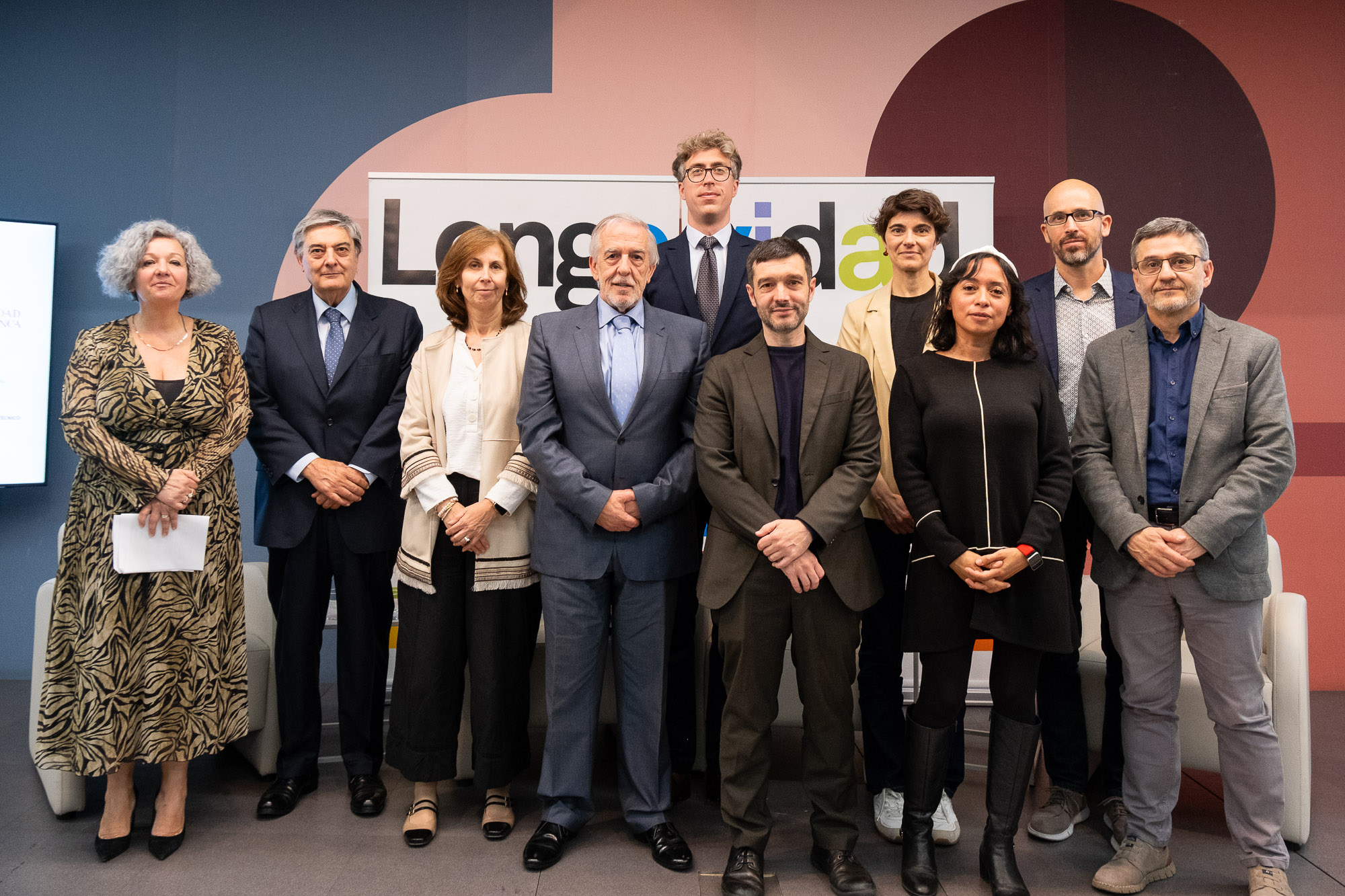
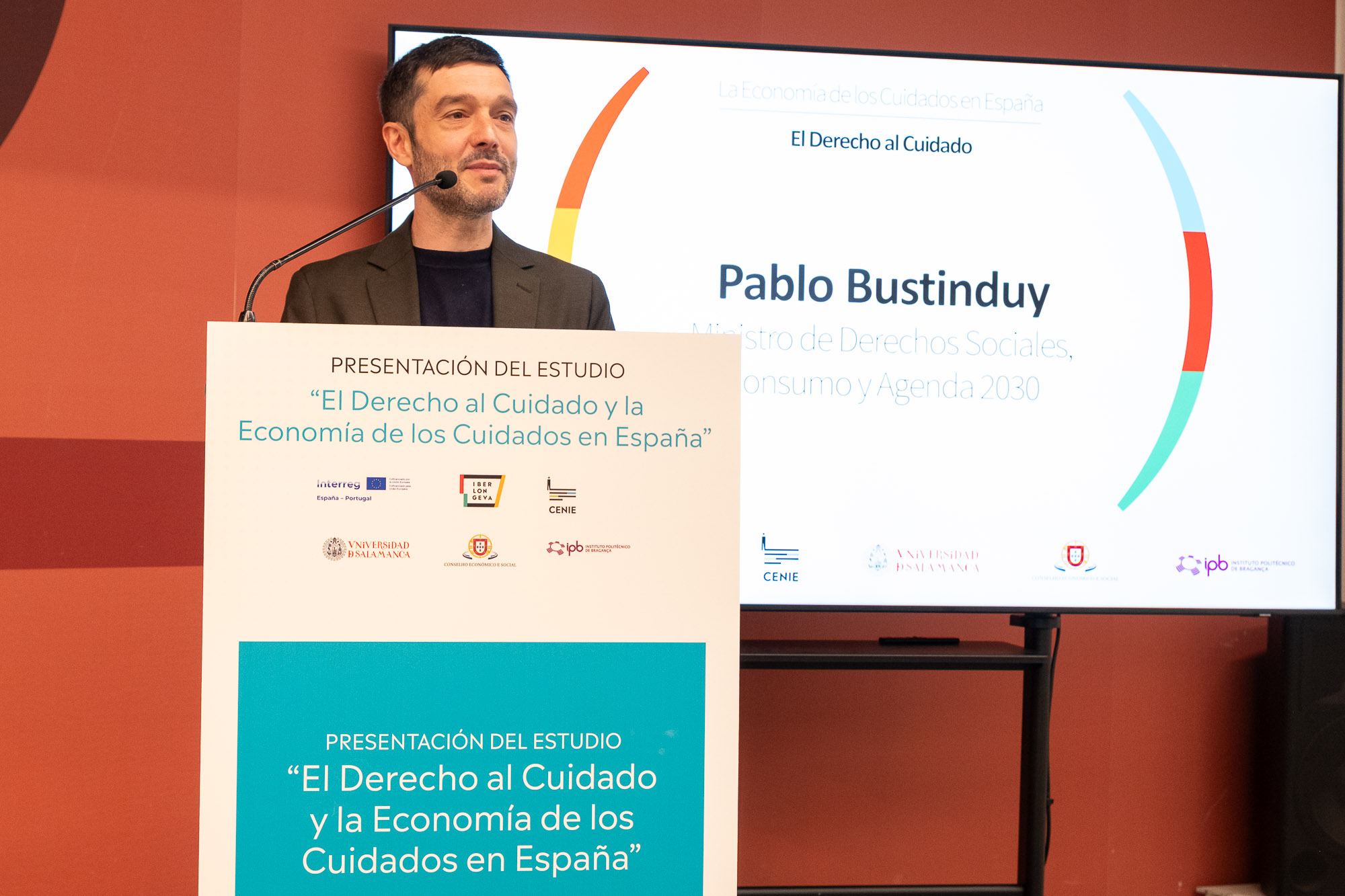
The University of Salamanca, through the International Centre on Ageing (CENIE), has presented today at the Círculo de Bellas Artes in Madrid the report The Right to Care and the Care Economy in Spain, a study that sets out the need to recognize the Right to Care as a social right and to consolidate long‑term care as the fourth pillar of the welfare state. The work is part of the IBERLONGEVA project, approved within the European Union’s Interreg VI‑A Spain–Portugal —POCTEP— 2021–2027 Programme.
The study analyses whether Spain effectively guarantees the right to receive care when a person needs it, especially in contexts of dependency, ageing and loss of autonomy. To this end, it examines the functioning of the System for Autonomy and Care for Dependency (SAAD), the sufficiency of public support, the weight of informal care and the economic impact of strengthening long‑term care policies.
Main conclusions of the study
Nacho Álvarez and Jorge Uxó, co‑directors of the study, presented its main conclusions:
Long‑term care must be at the centre of the renewal of the welfare state. Care cannot continue to be understood solely as a private or family responsibility, but as a social right, an essential public good and a strategic issue for social cohesion, equality and the economy.
Important progress has been made in the System for Autonomy and Care for Dependency —SAAD—, but its consolidation remains incomplete. Between 2017 and 2025, system benefits doubled and, since 2015, the so‑called “dependency limbo” was reduced by more than 70%. However, access times remain close to one year, and there is a care gap of 72.4% among people over 65 with some limitation in their daily life, and 63.1% among those with severe limitations.
Investment in dependency should not be understood as a mere cost, but as a public policy with social, economic and fiscal returns. The report estimates that in 2023, each euro allocated to dependency benefits generated around 1.6 euros of GDP impact. In addition, nearly half of the initial expenditure returned to public administrations through taxes and social contributions: for every euro invested, approximately 49 cents were recovered, significantly reducing the net fiscal effort.
To reduce the care gap, a roadmap is proposed based on sustained investment, coordination between administrations, common standards, strengthening home and community‑based care, professionalising the sector and a person‑centred model. Looking ahead to 2030, it estimates that strengthening the SAAD would require increasing investment by around 0.6 percentage points of GDP, with a potential effect of nearly 430,000 new jobs and an increase in public revenues equivalent to 0.30 percentage points of GDP.
The SAAD: relevant progress, but incomplete consolidation
The study acknowledges that the SAAD has experienced significant progress in recent years. By the end of 2025, regional administrations had recognised 1,726,288 people as being in a situation of dependency.
Of these, 1,610,266 were already receiving 2,274,461 benefits, either services or financial support.
The report also highlights that the so‑called “dependency limbo”—people with a recognised right who still do not receive an effective benefit—has been reduced by more than 70% since 2015, falling from more than 384,000 people to just over 107,000 by the end of 2025.
Despite this progress, the study warns that the system still has structural limitations. The process of accessing the SAAD continues to take, on average, close to one year, compared with the legal deadline of six months. This delay, together with the insufficient intensity of some services and the persistence of territorial inequalities, prevents the recognised right from always becoming an effective right.
The report estimates that 72.4% of people over 65 with some limitation in their daily life do not receive effective care from the SAAD. In the case of older people with severe limitations, the care gap stands at 63.1%. Furthermore, among those who do receive care from the system, 28% consider that the support received is insufficient to meet their needs.
Faced with this diagnosis, Nacho Álvarez, co‑director of the study, stated that “Spain has built its welfare state on three pillars (healthcare, education and pensions), but the fourth pillar, long‑term care, has not advanced at the same pace. Renewing the welfare state requires making the Right to Care an enforceable right, in the reality of benefits and services.” For his part, Jorge Uxó, also co‑director of the report, added that “informal care is equivalent to around 3.2 million full‑time jobs and, in the last 20 years, the hours devoted to it have multiplied by 2.5. Valuing it means recognising a volume close to 4% of GDP. An important part of the study is highlighting the economic importance of investing in care, not seeing it only as spending or cost, but as a country project.”
Renewing the welfare state through care
The study argues that long‑term care must be placed at the same level as healthcare, education or pensions, as part of a necessary renewal of the welfare state. The creation of the SAAD represented a historic step by recognising a subjective right in situations of dependency, but the report maintains that this fourth pillar remains underdeveloped.
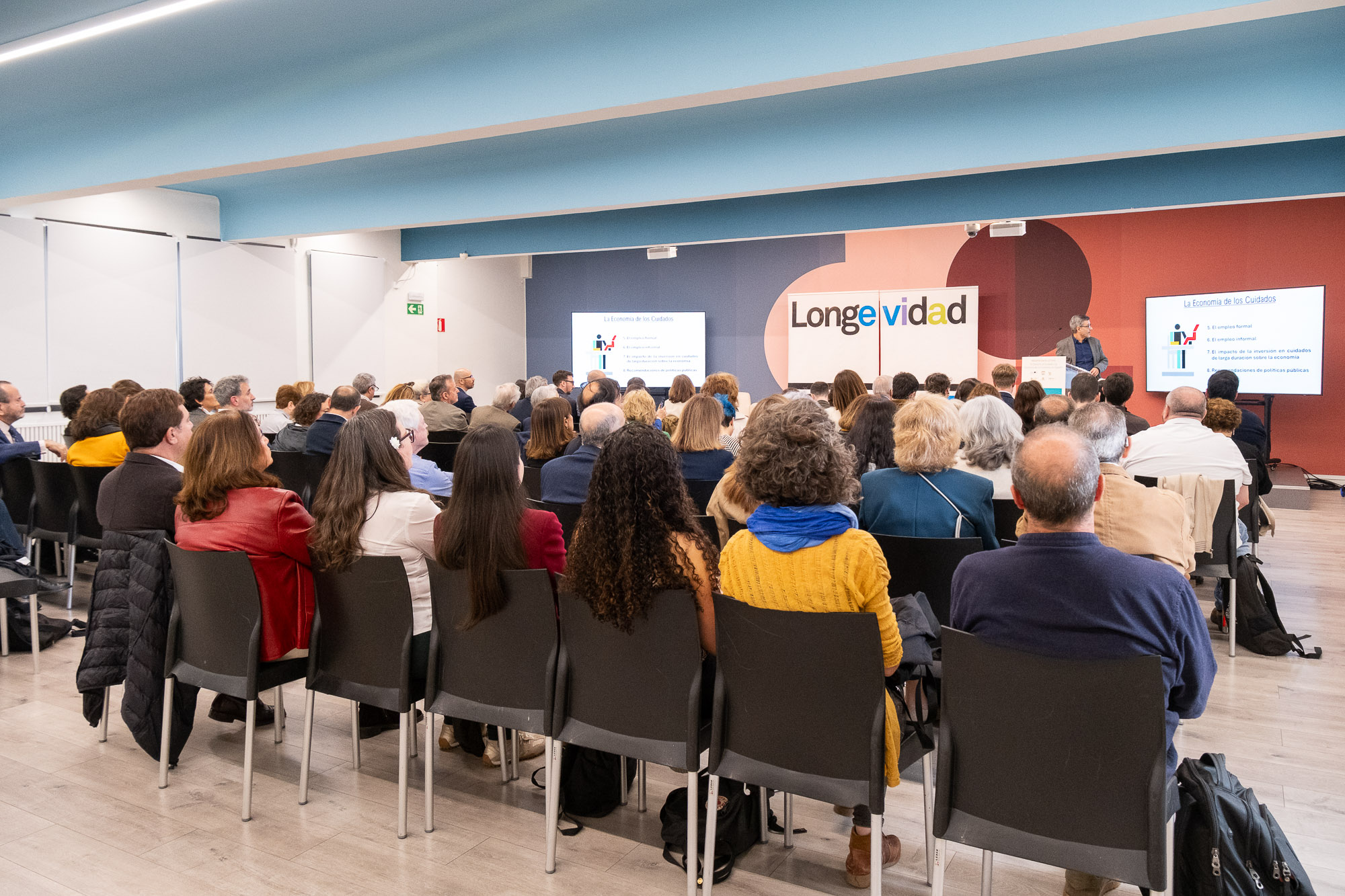
From the perspective of the Right to Care, the report argues that no person should be deprived of the care they need, nor should anyone be forced to provide care under unfair conditions. This requires strengthening funding, improving governance, reducing access times, professionalising the sector, expanding home‑based and community services, and moving towards a person‑centred care model.
The document also warns that the Spanish system continues to rely largely on informal care, carried out mainly in households and assumed mostly by women. According to the study, this informal care has an economic magnitude equivalent to 3.6%–4.7% of GDP, although it remains largely invisible in official statistics.
Territorial inequalities and the need for common standards
The report warns of strong territorial inequalities in the functioning of the SAAD, with significant differences in coverage, processing times, service intensity, co‑payments and public expenditure per beneficiary. These gaps condition effective access to the Right to Care depending on the place of residence.
To reduce these differences, the study recommends strengthening coordination between administrations, establishing common standards and moving towards “governed decentralisation”: a model capable of respecting regional management while guaranteeing comparable levels of access, quality and sufficiency across the entire territory.
The report also emphasises that improving the system is not only about increasing hours or amounts, but about transforming the model. Care should be oriented towards professional services, home‑based and community support, personal assistance, housing accessibility, assistive products, more personalised residential alternatives and mechanisms that allow care to be adapted to each person’s life project.
Investing in care generates well‑being and economic activity
From the perspective of the Care Economy, the study analyses the economic impact of public investment in dependency and concludes that the debate should not focus solely on how much the system costs, but also on its capacity to generate well‑being, activity, employment and public revenue.
Specifically, the report estimates that in 2023 an initial expenditure of 10.623 billion euros on dependency benefits generated a total impact of 17.260 billion euros on GDP, implying an economic multiplier close to 1.6. In addition, a substantial part of this investment returns to public administrations through taxes and social contributions, significantly reducing the net fiscal effort.
The study also positions the care economy as a highly relevant labour sector, with around 1.3 million jobs in Spain. However, it warns that it continues to be a strongly feminised sector, marked by higher rates of temporary and part‑time work and wages below the average. The quality of care, the report notes, depends directly on the quality of the employment of those who provide it.
The study was directed by Nacho Álvarez, Associate Professor of Applied Economics at the Autonomous University of Madrid and co‑director of the study, and Jorge Uxó, Associate Professor of Applied Economics at the Complutense University of Madrid and co‑director of the study. The research team also included Fernando Bermejo, Raúl del Pozo and Pablo Moya, from the University of Castilla‑La Mancha; Ricardo Molero and Laura Pérez Ortiz, from the Autonomous University of Madrid; Paloma Villanueva, from the Complutense University of Madrid; and Elia Gómez, from SIIS Documentation and Studies Centre, Eguía Careaga Foundation.
About CENIE
The International Centre on Ageing (CENIE), promoted by the General Foundation of the University of Salamanca, defines itself as a knowledge hub around longevity. It works closely with the Economic and Social Councils of Spain and Portugal and with the Polytechnic Institute of Bragança, forming a unique space for cross‑border collaboration.
CENIE was created as a response to a sociodemographic reality that presents new challenges and opportunities. To address them, it promotes research programmes, fosters social innovation and develops actions that help change the perception of the relationship between age, economy and society. Its activity includes scientific, educational and cultural projects with a common objective: placing longevity at the centre of public conversation.
The constant increase in life expectancy is one of the greatest achievements of our time: a transformative milestone that opens both opportunities and challenges. Scientific advances, health improvements and changes in lifestyle habits have made it possible to extend life as never before in history. The challenge now is to ensure that this extension of time translates into more active, healthy, participatory and prosperous lives.
With this aim, CENIE works to turn the demographic revolution we are experiencing into a genuine opportunity for shared well‑being, by researching, disseminating and generating consensus that make it possible for longevity to be lived with quality and meaning.
¿Quieres que te recomendemos más artículos en base a tus lecturas anteriores?