Spirituality and Meaning in the Final Stage of Life: An Introspective Look at Fulfillment
Traducir artículo
¿Quieres un resumen de este artículo?
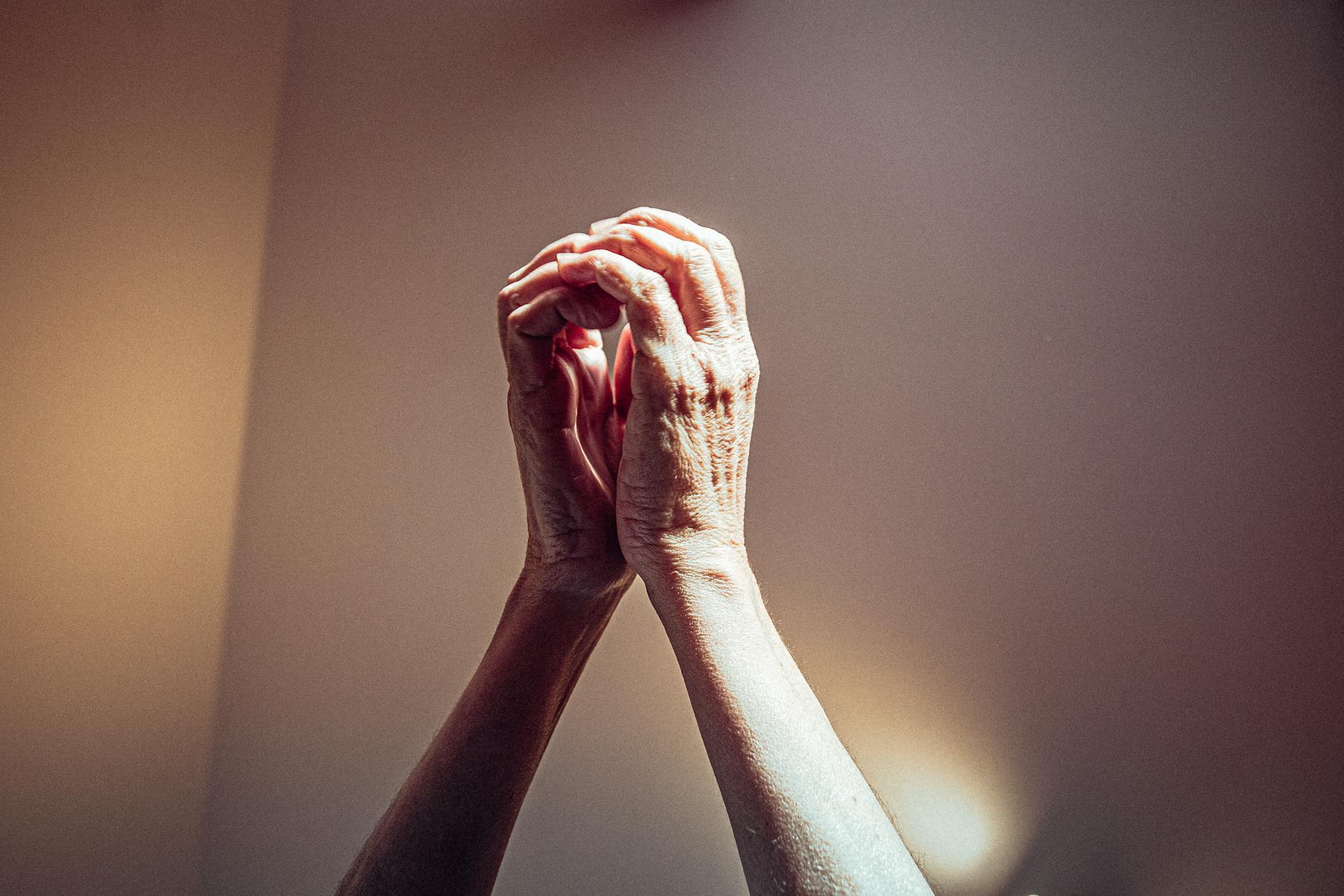
Francisca is 80 years old, and every morning, she lights a candle in front of an image of the Virgin of Grace that she inherited from her mother. She does not do it out of religious obligation but because this simple, repeated gesture brings her peace. Genaro, at 76, has been writing autobiographical letters for his grandchildren for several months, filled with memories and advice. He wants to leave them a non-material legacy—his life lessons. These are people who, in their final stage, engage in small acts of everyday spirituality, which do not always relate to dogma but always give meaning to daily life and depth to existence.
For a long time, spirituality in old age was a domain reserved for religion. However, more and more studies, stories, and experiences show that this dimension can be much broader—a form of inner connection, a rereading of the past, an acceptance of what is to come, and a way to build serenity. This is what Mario Ciccorossi, a spiritual care agent at Sant Joan de Déu Hospital, who holds degrees in pedagogy and theology, told me. “Today, we live in a society where cultural, religious, and spiritual diversity is evident. Spirituality is that universal dimension common to all human beings; it is a dynamic process in three directions: towards oneself (intrapersonal), which allows one to build a sense of purpose in life; towards the environment (interpersonal), which enables connection with others and everything around us; and finally, towards the transcendent or transpersonal—the sacred, the divine—which can be named and understood in different ways,” Ciccorossi explained. He is also a philosophy professor and a speaker at national and international conferences.
The Spanish Society of Palliative Care (SECPAL) emphasizes the importance of addressing the spiritual dimension at the end of life—not as something confessional but as a way to support each person’s sense of meaning and dignity.
Austrian neurologist, psychiatrist, and philosopher Viktor Frankl, author of Man’s Search for Meaning, proposed that the need to find meaning is as fundamental as the need for food or affection. In old age, when many structures change—work, relationships, health, body, and connections—this search for meaning takes on a special intensity.
In this context, spirituality is not just a religious practice but a dimension that involves values, deep connections, experiences of transcendence, or communion with something greater—nature, art, memory, or a community. This is also emphasized by Dr. Christina Puchalski, a global reference in spirituality and health, who advocates for its inclusion as an integral part of human well-being at all stages of life. In her article Spirituality and Health: The Development of a Field, she explains how a group of academics and medical professionals launched a movement to reclaim the spiritual roots of medicine, which had been overshadowed by new technology in the 20th century. In another publication, Spirituality in Geriatric Palliative Care, Puchalski provides an overview of spirituality as an essential aspect of geriatric palliative care and offers guidelines for physicians to diagnose spiritual distress and integrate spirituality into their clinical practice.
In old age, people’s spiritual dimension often takes on more intimate and less normative forms than in other stages of life. As mentioned earlier, it is not so much about attending mass or following learned rituals—although for many, that remains central—but rather about looking at life from another angle: with less haste, more depth, and greater gratitude. Robert C. Atchley, an American gerontologist and sociologist, proposed in his book Spirituality and Aging (2009) that old age brings about a kind of inner integration—people review their history, recognize both light and shadow, and often find new ways to reconcile with themselves, others, or the mystery.
How can spirituality be cultivated for a fuller maturity and old age? There are various tools and habits that can help: contemplative walks, writing memoirs, gardening as a form of meditation, reading philosophical texts, or simply seeking silence. Mindfulness and meditation adapted for older adults have shown significant psychological benefits—they reduce anxiety, improve sleep quality, and strengthen the perception of life’s meaning. “Meditation is, in my opinion, one of the most powerful techniques for achieving psychological balance in our lives,” writes physiology professor José Viña in his new book The Science of Longevity (Sinequanon). “It is the best way to be happier and prepare for greater longevity,” he asserts. Perhaps for this reason, meditation groups without religious connotations are already being offered in day centers and senior associations as a way to cultivate presence and well-being.
A more concrete tool, a suggestion for the curious, is the podcast in which Ciccorossi participates, created by the healthcare staff at Sant Joan de Déu Barcelona Hospital, titled Sonidos del Silencio SJD, available on Spotify, Ivoox, and Apple Music.
In conclusion, spirituality in old age is not a minor issue—it is not a luxury, an eccentricity, or a superstition. It is a necessity, a dimension that deserves to be heard, respected, and nurtured, because often, in conscious silence, life pulses more fully than ever.
¿Quieres que te recomendemos más artículos en base a tus lecturas anteriores?