

¿Quieres un resumen de este artículo?
Strategic Progress of a Cross-Border Alliance
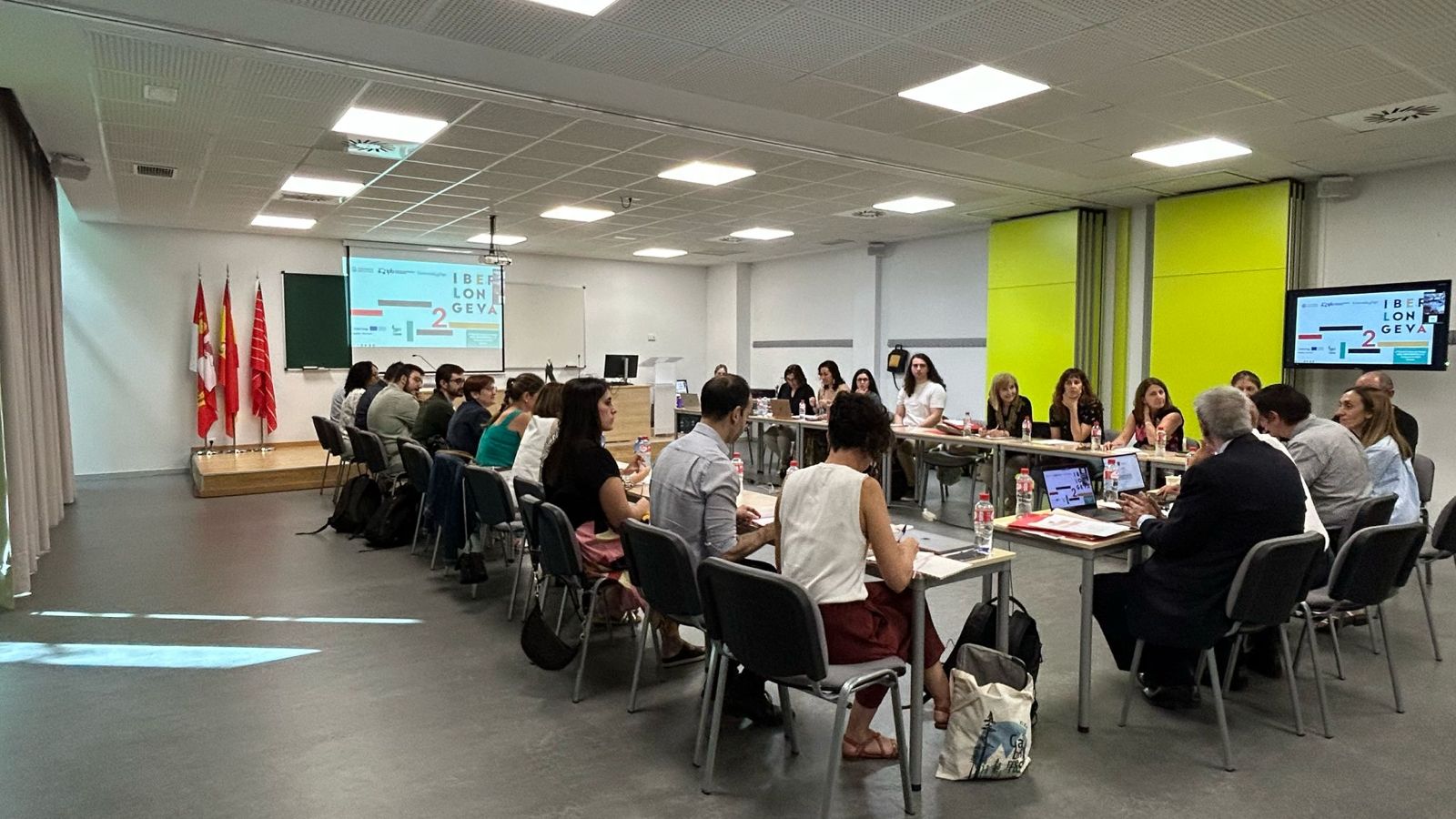
The IBERLONGEVA Working Group held its second institutional meeting on July 15 in Zamora, consolidating the methodological, operational, and strategic advances that shape the core of this ambitious cross-border project. The meeting, held at the University School of Nursing in Zamora (University of Salamanca), brought together representatives from all participating institutions to review objectives, share progress since the first session, and reinforce a common roadmap centered on a clear purpose: to promote healthy longevity and prevent frailty in people over 60.
An Interreg Project to Address Structural Aging
IBERLONGEVA, co-financed by the INTERREG VI-A Spain–Portugal (POCTEP) 2021–2027 Cooperation Program of the European Union, is based on an inescapable premise: population aging is no longer a future scenario but a structural reality. In regions such as Zamora, Ourense, and Bragança, where the proportion of older people far exceeds that of young people, the challenge is not only demographic, but also social, health-related, economic, and cultural. In response, IBERLONGEVA proposes an integrated approach: to generate rigorous scientific knowledge, activate social innovation processes, and design tools to guide future decisions in public health, community well-being, and territorial planning.
Institutions Engaged in Exemplary Cooperation
The meeting, coordinated by researcher Óscar González Benito on behalf of the University of Salamanca, included active participation from all involved institutions: University of Salamanca, Polytechnic Institute of Bragança (including its School of Health), University of Vigo (including the Higher School of Computer Engineering in Ourense), University Schools of Nursing in Ourense and Zamora, CTIC Foundation, Estudio de Comunicación, and CENIE, which holds the overall coordination of IBERLONGEVA. This alliance, built on the complementarity of knowledge and capabilities, has made coordinated progress possible on all fronts of the project.
Scientific Progress in Research Modules
One of the main focuses of the session was the analysis of progress in the research modules. The social module, led by researchers Celia Fernández-Carro and Madelín Gómez-León, has completed the design of a multidimensional questionnaire that gathers key variables such as support networks, housing conditions, social participation, use of technology, perceived health, and level of functional autonomy. Meanwhile, the health module, coordinated by Mónica de la Fuente and with contributions from M.ª Ángeles Rol, Verónica Romero, and María José Martínez Madrid, has defined a set of physiological and psychological indicators focused on sleep quality, circadian rhythms, stress, emotional health, nutrition, physical activity, and frailty.
A Representative and Regionally Balanced Sample
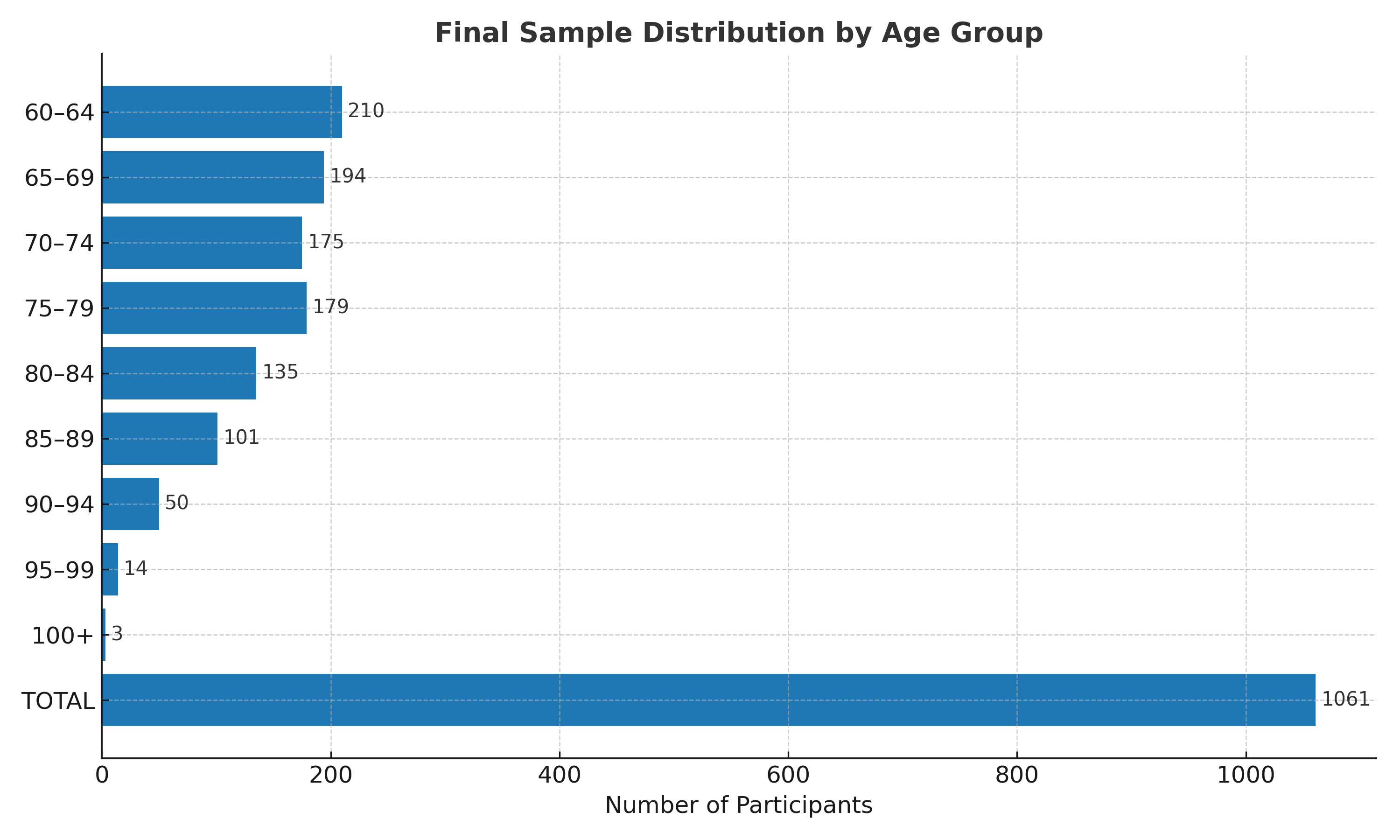
These questionnaires will be administered to a representative sample of 1,061 individuals over the age of 60, equitably distributed among Zamora, Ourense, and Bragança. The sample has been carefully stratified by age group, gender, and type of habitat (urban, semi-urban, and rural), allowing for a more accurate and fair reading of the diversity of aging in different contexts. In total, 54 possible combinations per territory have been defined, ensuring coverage in each and enabling inter-territorial comparability.
Technological Infrastructure in Service of Research
At the same time, progress has been made on the technological infrastructure that will enable the collection, traceability, and analysis of data. The Higher School of Computer Engineering at the University of Vigo (Ourense campus), under the coordination of Francisco Javier Rodríguez, is working on the digitization of instruments and protocols, ensuring their compatibility with future integration systems within the OLAS Observatory. This technological infrastructure not only guarantees the quality of fieldwork but also lays the foundation for advanced data analysis through automated models, artificial intelligence, and interactive visualizations.
Legal Framework and Data Protection
The project’s ethical and legal framework was also reviewed. The legal team, coordinated by Ana Garriga and Susana Álvarez, reported on the completion of the Data Protection Impact Assessment (DPIA) for the social module, as well as the advanced status of the health module’s assessment. This ensures compliance with the European Union’s General Data Protection Regulation, guaranteeing that all collected information is treated with the highest standards of confidentiality, transparency, and security.
Field Teams: Proximity, Trust, and Rigor
The field teams—made up of local professionals from the Nursing Schools of Ourense and Zamora, as well as the School of Health of Bragança—were acknowledged as the project’s human key. Their close ties to the community, familiarity with the local environment, and specific training make them essential agents to ensure the quality, sensitivity, and effectiveness of the fieldwork. During the meeting, it was confirmed that intensive training programs for these teams are already being designed and will be implemented in the weeks prior to the start of interviews, scheduled for the fall of 2025.
Awareness Campaigns and Preventive Culture
The session also addressed the awareness and communication campaigns that will accompany the field phase. Coordinated by Estudio de Comunicación, these campaigns have been designed in versions adapted to each territory, both in content and language (Spanish, Galician, and Portuguese). With a pedagogical, participatory, and culturally sensitive approach, their objective is to explain the meaning of the project, encourage citizen participation, and promote a culture of healthy aging. The planned actions combine traditional media (leaflets, talks, local media collaborations) with digital tools, social media, and audiovisual materials aimed at diverse audiences.
OLAS: Toward a Living and Predictive Knowledge Observatory
Finally, the session reviewed the progress of the Observatory for Active and Purposeful Longevity (OLAS), the main knowledge structure derived from IBERLONGEVA, whose first layer will be established based on data obtained from the social and health modules.
OLAS will progressively integrate the social, health, and clinical data collected by the project, creating a living, interoperable platform open to predictive analysis. The CTIC Foundation, responsible for the governance model, in coordination with the legal team, will ensure that the Observatory meets the highest European standards in terms of security, participation, and data protection. The School of Computer Engineering in Ourense (UVigo) leads the platform’s technological development, with the first operational version expected in the second half of 2026.
A Positive Assessment and a Clear Path Forward
The meeting concluded with a very positive assessment of the progress made. The participating institutions highlighted the coherence achieved among the different teams, the methodological strength of the designed instruments, the maturity of the ethical and legal framework, and the growing commitment of the field teams. It was agreed to maintain a shared calendar that will allow for the launch of awareness campaigns at the beginning of autumn, the start of fieldwork between October 2025 and March 2026, and the presentation of integrated preliminary results in the second half of 2026.
CENIE: Driving Active and Purposeful Longevity
From CENIE, the institutional promoter of the project, the commitment was reaffirmed to a vision of longevity that does not merely diagnose problems but actively contributes to building solutions. In a context of accelerated change, IBERLONGEVA stands as a firm commitment to bringing together science, technology, and civic engagement to support our societies in the transition toward an active, healthy, and meaningful longevity.

¿Quieres que te recomendemos más artículos en base a tus lecturas anteriores?