
Artificial intelligence and dialogue between science and society at CENIE
Traducir artículo
¿Quieres un resumen de este artículo?
A person arrives at cenie.eu with a question about care, memory, housing or work. They may not know the specialised term or which section to look in. The question is clear in their life, but not yet in the language of the archive.
The dialogue between science and society is not only about science explaining and society listening. It also requires that questions born from lived experience interrogate accumulated knowledge and open new perspectives. In longevity, this exchange is especially necessary because a single concern cuts across multiple disciplines.
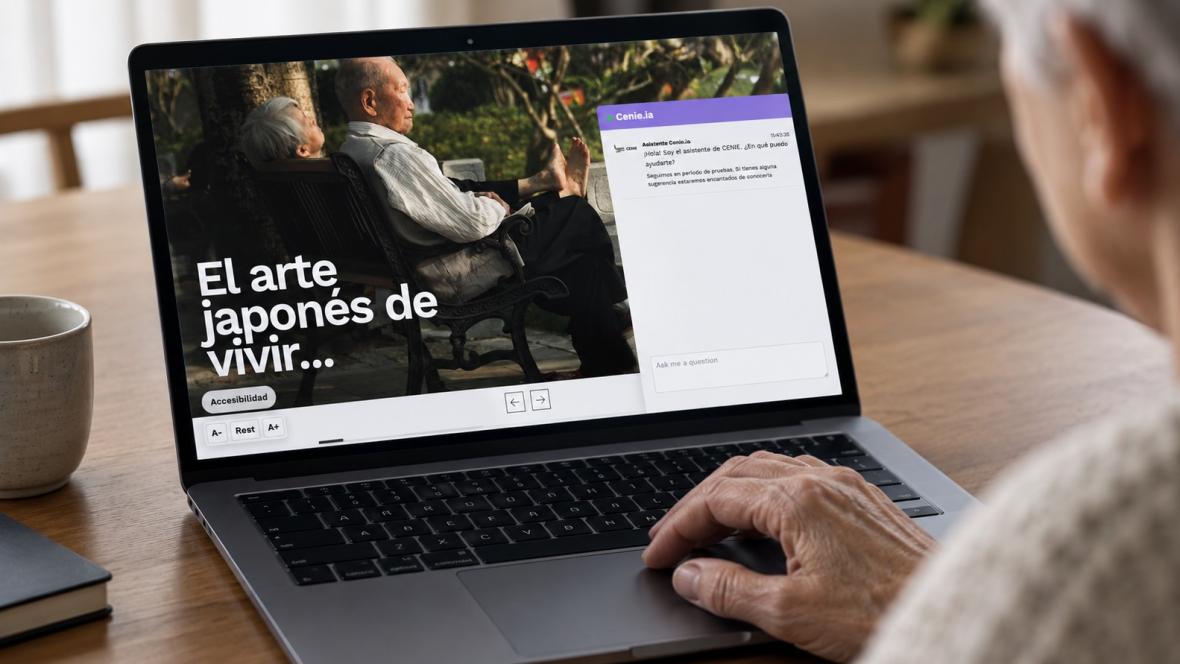
Since 2017, CENIE has brought together research, projects, interviews and articles to bring these worlds closer. The functions available in this beta version —semantic search, conversational assistant, summaries, automatic translation and recommendations— aim to support that purpose. They are different pathways to help a question meet the sources that can enrich it.
Asking in our own words
A traditional search engine works well when we know the right vocabulary. But a query such as “how does the neighbourhood influence loneliness?” may lead to content published under other terms: public space, community, housing, mobility or social isolation.
Semantic search with AI locates content that is close in meaning, even if it does not repeat the same words. This does not mean it understands like a person: it estimates the proximity between the meaning of the query and the meaning of the content. In this way, a concern expressed in everyday language can open a path toward research written with a different vocabulary.
This proximity does not measure scientific quality, timeliness or relevance for a specific decision. Authorship, method, date and sources still require the reader’s attention.
Conversing without delegating judgement
The Cenie.ia assistant accepts open questions and responds in natural language. The interface indicates that it consults CENIE content and links to recognised titles. An initial conversation can therefore lead to the portal’s articles.
A generative system can combine retrieved information and produce a new text. It can relate topics and adapt an explanation, but it can also omit nuances or produce errors with an appearance of confidence. The U.S. National Institute of Standards and Technology refers to this risk as “hallucination”.
The response should be understood as guidance and checked against the linked content. Cenie.ia can help discover readings and prompt better questions; it does not replace evidence, a diagnosis or professional advice. The interface reminds users that it remains in testing.
Lowering barriers to broaden the conversation
In articles that include these options, on‑demand summaries and automatic translation into Spanish, English, Portuguese, French, German or Italian can facilitate a first entry when time is short or language is a barrier. The website adds virtual guidance, read‑aloud features and visual adjustments. These are not generative AI, but they also support accessibility.
These aids must preserve the path to the full text. A summary may omit an exception or the difference between correlation and causation. A translation may lose a cultural or scientific nuance. The original article and its sources remain the reference.
AI adds a new access route. Navigation, search and the controls each person chooses remain necessary.
Connecting disciplines and opening perspectives
Social questions cross academic boundaries. A concern about housing may lead to work on care, mobility, loneliness or economics. At the end of some articles, automatic recommendations propose related pieces and make these connections visible.
The function uses at least the open article and the language; the interface also mentions “previous readings”. In the beta, it is helpful to explain why each suggestion appears. Automatic affinity does not equal quality. To enrich dialogue, recommendations should open diverse perspectives.
The beta as an opportunity to listen
The interface notes that Cenie.ia is still in testing and invites suggestions. With voluntary listening mechanisms and a robust evaluation process, these contributions can reveal what people ask, what the system fails to recognise and which sources are hard to find.
Listening requires simple channels, diverse participation and clarity about whether queries are stored and for what purpose. Turning contributions into institutional learning requires human decisions.
The success of the beta will be seen in relevance, fidelity, accessibility and error correction. Suggestions can guide improvement and reveal which topics CENIE needs to explain better.
Trust makes dialogue possible
To engage in dialogue, a person needs to know when they are receiving an automated response, what sources support it and what happens to their query. The European Artificial Intelligence Act reinforces the obligation to inform users when interacting with certain AI systems. The name Cenie.ia identifies the assistant; the other functions can also indicate their automatic nature.
A short guide would help explain what each function consults, its limits and how data is protected. In the assistant, it is not advisable to enter names, addresses, identifiable diagnoses or sensitive information, in line with CENIE’s terms of use.
Editorial work continues
These tools add editorial responsibility. CENIE must take care with how automatic mediation summarises, translates and relates knowledge. Human work remains essential to review results, listen to users and set boundaries.
The decisive test will not be the surprise of the first response, but what happens afterwards: whether an everyday concern reaches a reliable source, whether research becomes more understandable without losing nuance, and whether the reader returns with a better question.
The dialogue between science and society does not end when technology responds. It begins when knowledge becomes more accessible, can be contrasted and remains open to new questions.
What would need to happen for a question addressed to Cenie.ia to become a true dialogue with knowledge?
¿Quieres que te recomendemos más artículos en base a tus lecturas anteriores?