
Loneliness Revisited: Between Isolation, Choice, and Transformation
Traducir artículo
¿Quieres un resumen de este artículo?
Loneliness Revisited: Between Isolation, Choice, and Transformation
Loneliness has become a word that is too quick. It is used as a diagnosis, as a social alarm, as a label that simplifies very different realities. In long-lived societies, where life stretches out and biographies become more complex, being alone does not always mean the same thing. Sometimes it is a wound. Sometimes it is a refuge.
Sometimes it is a choice. And sometimes it can also be transformation.
That is why it is worth revisiting loneliness with more precision and fewer automatisms. Not to downplay its seriousness when it hurts, but to understand it better. Because we only care well for what we understand well.
Not All Loneliness Is Isolation
Isolation is an objective condition: a lack of contacts, networks, support.
Loneliness, by contrast, is a subjective experience: you can feel lonely even surrounded by people, and you can be alone without feeling abandoned.
Many misreadings are born in this nuance. When we confuse loneliness with isolation, we tend to prescribe quick solutions: “go out,” “join something,” “surround yourself.” But human experience is more delicate. The problem is not being alone; the problem is feeling alone with no way out, living disconnection as a loss of meaning.
In long-lived societies, where coexistence between generations stretches for decades, a paradox can occur: more people living longer and, at the same time, more people experiencing disconnection. It is not only a demographic issue. It is an issue of bonds.
Chosen Loneliness: The Right to Be at Peace
There is a loneliness that is legitimate and, at times, necessary: chosen loneliness.
It is personal time. Sought-after silence. Protective distance. The space where one can hear oneself.
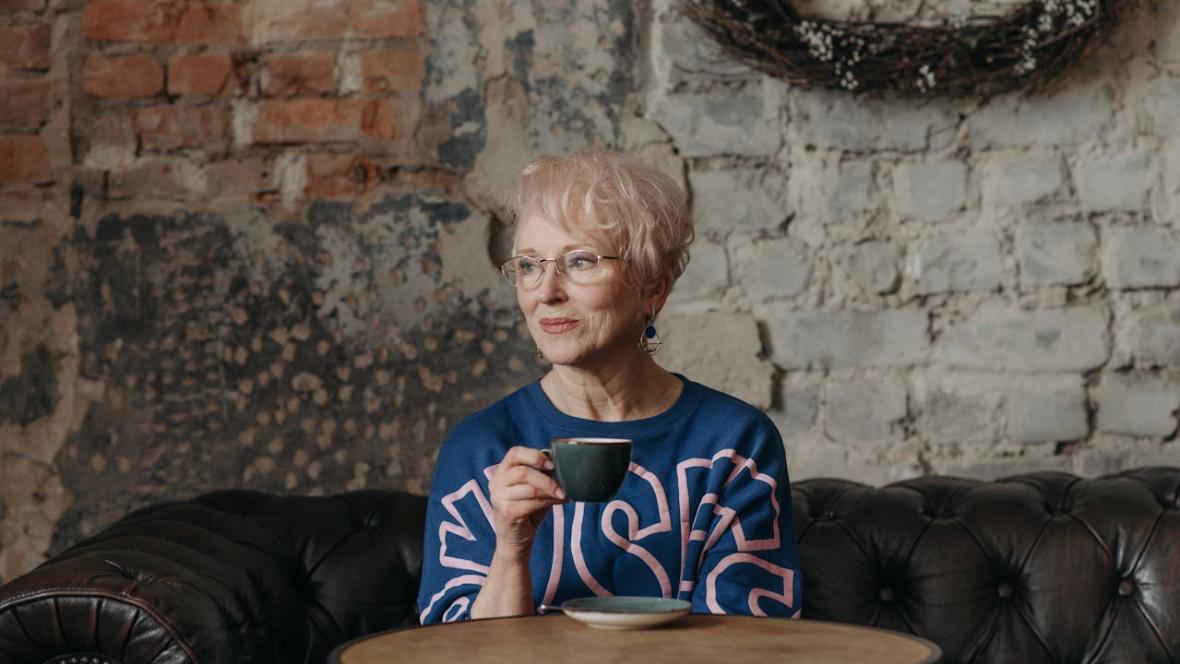
Aging can bring a desire for simplification: less noise, fewer social obligations, more authenticity. Some older people find in loneliness a form of autonomy: they organize their time, care for their rhythm, choose when and with whom.
That loneliness is not pathology. It is a way of life.
The cultural challenge is not to treat it as an anomaly or as an automatic sign of sadness. A mature long-lived society must recognize the right to be alone without reading it as failure.
Imposed Loneliness: When Bonds Are Missing
Another thing is imposed loneliness: the kind born from losses, ruptures, the social aging of one’s surroundings, the dispersal of family, or precarious networks.
Widowhood, children’s migration, rural depopulation, worsening health, or poverty can turn loneliness into an experience of abandonment. In that case, it is not enough to “accompany”: we must rebuild social fabric.
Imposed loneliness is not only an emotional state; it has concrete effects on physical and mental health. It increases stress, worsens sleep, weakens the immune system, and accelerates frailty. That is why, in long-lived societies, unwanted loneliness is a matter of public health and social justice.
What Loneliness Reveals
Loneliness, even when it hurts, has a revealing quality: it shows where the structures that sustain everyday life fail. Not only family failures, but community and territorial failures.
There are neighborhoods without places to meet, cities designed for moving through but not for staying, towns where the lack of services turns isolation into destiny. There are also work cultures that exhausted bonds and left entire identities anchored in work. When that work ends, the person discovers they had an agenda, but not a community.
Loneliness reveals, with harsh clarity, what kind of society we have built: one that facilitates contact, or one that makes it difficult.
Loneliness as Transformation
There is also a third possibility: loneliness as transformation. Not the painful loneliness that breaks, nor the chosen loneliness that protects, but the loneliness that—crossed with support and meaning—becomes a threshold.
Many people, after a loss or a life change, discover in loneliness a territory of reconstruction: they learn to inhabit themselves, to reorganize desires, to redefine identities. In long lives, these transitions can occur at any moment: at 40, at 60, at 80.
In these cases, loneliness is not an ending, but a passage. And passage needs accompaniment, not judgment.
Caring Without Simplifying
Public policy and social intervention often seek measurable indicators. That is understandable. But caring for loneliness requires something more than diagnosis: it requires listening.
It is not only about “creating activities,” but about creating belonging. It is not enough to offer company; we must offer a sense of place. And it is not enough to “integrate older people” into programs; we must design communities in which all ages feel needed.
In long-lived societies, combating unwanted loneliness is not about filling schedules: it is about rebuilding bonds and everyday ecosystems.
A Society That Knows How to Be
The test of maturity of a long-lived society is not only how long it lives, but how it cares for its ways of being: being together, being close, being available. And also, when someone needs it, being by their side.
To revisit loneliness is to recognize its diversity. And recognizing that diversity is the first step to avoiding quick recipes for what is, in reality, a deep human experience.
Because loneliness is not just one thing. And that is why it cannot have just one answer.
At what point does loneliness become pain… and at what point does it become freedom?
¿Quieres que te recomendemos más artículos en base a tus lecturas anteriores?