
Leisure in Longevity: From Tourism to Lifelong Learning
Traducir artículo
¿Quieres un resumen de este artículo?
Living longer does not mean doing less.
In long-lived societies, leisure stops being a parenthesis to become a decisive territory of well-being. We no longer speak of “free time,” but of time with meaning: a space where we cultivate who we are when obligations lose weight and life can finally unfold freely.
Aging is not withdrawing: it is reorganizing life so that leisure —that humble word, so often underestimated— becomes a driver of health, purpose, and connection.
Leisure as an Indicator of Well-Being
For decades, measuring aging meant measuring years. Today we know that the quality of those years depends largely on how they are used. Leisure is not a luxury; it is a determinant of emotional, cognitive, and social well-being.
Studies on healthy longevity show that people who maintain enjoyable activities —traveling, reading, learning, dancing, exploring, creating— have a lower risk of depression, greater resistance to cognitive decline, and a more positive perception of life.
Leisure does not merely entertain: it structures identity, creates bonds, and opens horizons.
In new long-lived societies, leisure ceases to be the “after everything” and becomes “and now, who do I want to be?”
Tourism: Traveling to Remain Part of the World
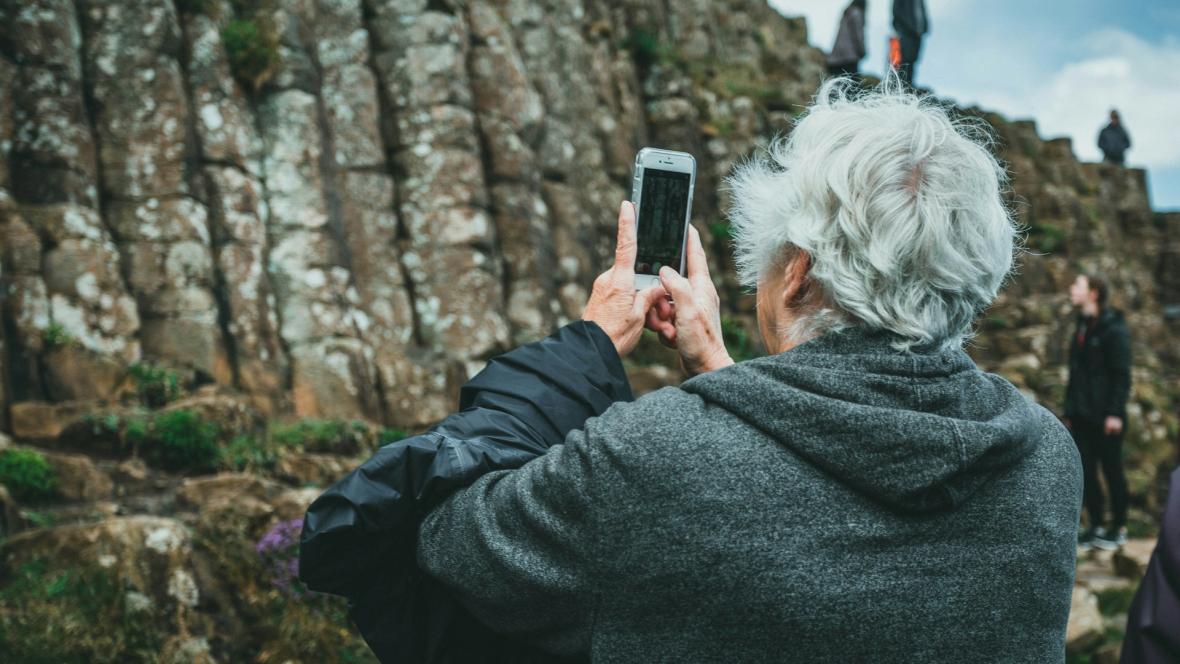
Tourism is one of the most visible forms of leisure, but also one of the deepest. For many older adults, traveling is not escaping: it is continuing to belong to the world, participating in it, remaining an active subject of experience.
Travel expands memory, shakes routines, and nourishes curiosity —that invisible muscle of longevity. In both Spain and Portugal, senior tourism is consolidating as a cultural and economic phenomenon that reveals something essential: mobility is also a form of freedom.
We are no longer talking only about spas or organized trips. We are talking about cultural routes, hiking, creative tourism, visits to natural spaces, gastronomic experiences, international volunteering, intergenerational exchanges.
Traveling as if to say: “time hasn’t stopped me.”
Creative Leisure: Working with the Hands, Thinking with the Soul
Creativity is another form of leisure that flourishes with age.
Painting, writing, playing an instrument, taking photographs, participating in workshops or cultural collectives activates a dimension of well-being that cannot be measured with clinical scales: the pleasure of creating, of turning time into expression.
Creative leisure offers something deeply therapeutic: the possibility of narrating one’s own life.
And that, in societies where old age has so often been silenced, is an act of emancipation.
Lifelong Learning: Studying at Seventy, Reinventing Oneself at Eighty
If the twentieth century invented compulsory education, the twenty-first will invent continuous learning.
Lifelong learning is no longer a trend: it is a right.
Senior universities, cultural programs, online courses, workshops on history, philosophy, technology, languages, neuroscience, literature… learning after 60 is not a pastime: it is a way of continuing to grow.
Scientific evidence is clear: studying in later life increases cognitive reserve, improves self-perception, strengthens self-esteem, and facilitates social integration.
But beyond the cognitive dimension, learning offers something more intimate: the feeling that life is not yet finished.
Older adults who learn do not return to school: they carry the school with them.
Leisure and Community: The Importance of Sharing Time
Leisure also creates community.
Walking groups, choirs, book clubs, community workshops, or volunteer spaces generate a kind of bond that combats loneliness in a way no clinical intervention can match.
On the Iberian Peninsula —Spain and Portugal— this community dimension of leisure has special value:
conversation, the street, the shared table, the tradition of strolling, neighborhood cultural life… all of this forms part of the Iberian heritage of well-being.
Longevity needs community, and community needs shared time.
That is why leisure is not accessory: it is social infrastructure.
A New Ethics of Free Time
Perhaps the revolution of longevity consists, in part, of revaluing non-productive time.
For decades, society measured people’s worth by what they produced. Longevity challenges that logic: leisure is no longer a pause between two obligations, but a legitimate space for human development.
Free time is not empty time: it is available time.
To live, to rest, to explore, to be with others.
A society that understands leisure as a right —and not as a privilege— prepares itself to age better.
What would you like to invest your time in when the clock of obligations slows down, and time finally becomes yours?
¿Quieres que te recomendemos más artículos en base a tus lecturas anteriores?