Care policies and the importance of space
Traducir artículo
¿Quieres un resumen de este artículo?
There are times of the year that seem more productive, periods of greater activity. Recently, I have taken part in several sessions and talks on a topic that I believe is fundamental to improving the quality of life of citizens in general and, more specifically, of people who need care (or provide it), as well as those who do not require care but experience mobility difficulties: the intersection between space and care.
A sidewalk “interrupted” by a tree, deteriorated pavement, a pedestrian crossing with a traffic light that changes too quickly, or a building without an elevator rarely appear on the list of problems addressed by a care system. They are usually viewed as separate issues related to urban planning, housing, mobility, or even routine maintenance, or, more often, they are not considered at all. Yet these are precisely the conditions that determine who can leave their home, move around independently, reach a local shop, or participate in the everyday life of their neighborhood. They also determine who becomes confined, who begins to require support they did not previously need, and who gradually disappears from shared spaces. In other words, they determine who can continue to exist in social life, continue to participate, continue to be.
When we talk about care policies, we traditionally, and rightly, focus on caregivers, on those who need support, and on the services that respond to those needs. Home care services, day centers, financial benefits (recently improved in Spain), social services, and the recognition of caregivers are all fundamental pillars of any care system. However, this approach often begins when a need has already become visible, and it tends to locate care solely within the relationship between the person providing it and the person receiving it, as though everyone else, and the very design of the spaces we inhabit, had nothing to do with it.
In these approaches, the material, spatial, and institutional conditions that sustain everyday autonomy and make care relationships possible often remain overlooked. What I am proposing here is a shift, or rather an expansion, of our perspective: away from focusing exclusively on who provides care, for how long, and with what resources, and toward examining which characteristics of the home, the building, the street, or the neighborhood make it possible both to provide care and to receive it.
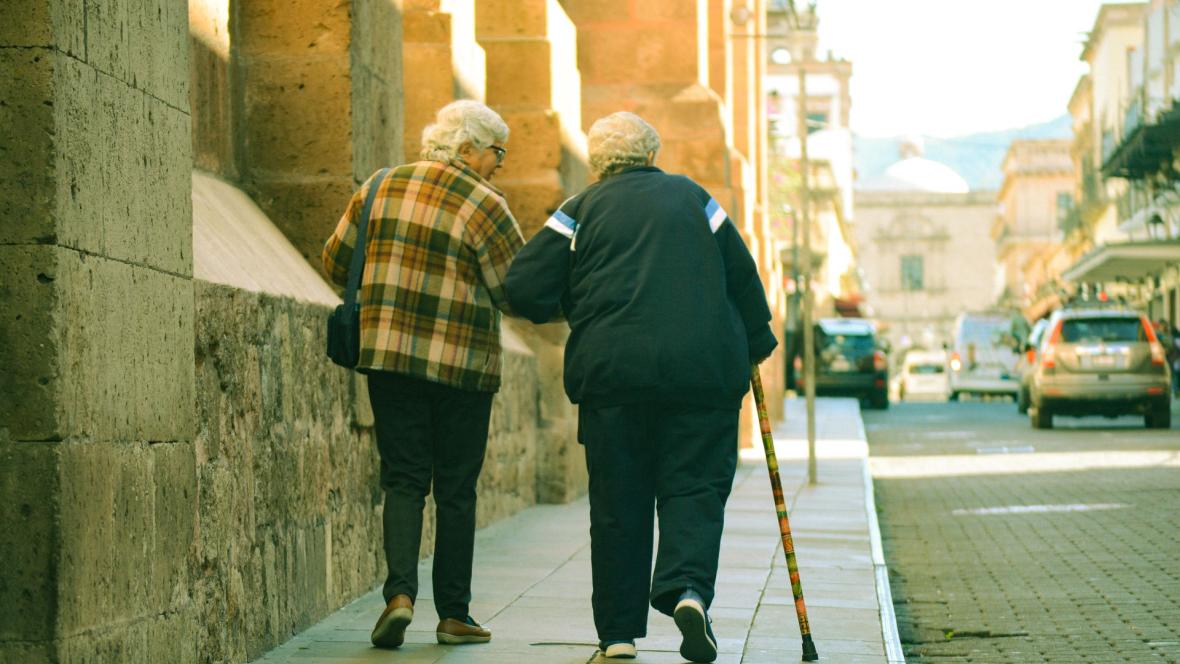
Space is not a passive setting, merely the backdrop to the diorama of our lives. It plays a decisive role in shaping our opportunities to live those lives. A wide, well-maintained sidewalk allows someone using a cane, a walker, or a wheelchair to move around independently. A sidewalk crowded with obstacles can make the same journey risky or impossible. The same applies when comparing a ramp with a poorly maintained flight of stairs.
As a result, two people with similar physical abilities may experience very different degrees of autonomy depending on the conditions of their surroundings. Space can compensate for certain limitations through features such as elevators and ramps, while turning others into insurmountable barriers, or even forms of dependency, sometimes in the most unexpected ways.
By saying this, I am not diminishing the importance of the bodily or personal dimensions of autonomy. Rather, I seek to broaden our understanding by recognizing that autonomy is not the same as self-sufficiency, nor does it mean being able to do without others. It is also profoundly mediated by space. We might even define autonomy as a “socially sustained” capacity, supported by relationships, services, resources, and infrastructure. In other words, it is the welfare state at its best. Home care matters, but so does something that may appear as mundane as the maintenance of our surroundings. And it is far from insignificant.
What I am also suggesting is that space itself “cares” for us, insofar as it allows us to continue participating, continue receiving care, and continue relating to others. The design and maintenance of our surroundings make repeated encounters with neighbors possible, and these repeated encounters are what create familiarity. They allow us to recognize and be recognized.
We recognize the person who works at the local shop, those who take their daily walks at the same time, or the neighbor whose name we may not know but whose presence forms part of our everyday world. These are often described as weak ties, different from friendship or family relationships, yet they can generate a sense of belonging, trust, and reciprocity. They can even generate forms of care. Under certain circumstances, it is these semi-familiar people, whom we regard as part of our daily lives, who notice an absence, offer practical assistance, or recognize that something is wrong and alert others.
This is what I mean when I speak of community care. It does not require large-scale investments or complex interventions, but neither can it emerge spontaneously when a crisis occurs if there has been no shared life beforehand. And in this respect, space is essential: a space that has enabled people to meet, recognize one another, and build a degree of trust.
These are the issues I am referring to when I speak about caring environments. A spatial policy of care must also consider the community, though without romanticizing it. Communities cannot replace professional care or take responsibility for needs that require an institutional response. Their role is different: to sustain belonging, recognition, participation, and everyday forms of support that cannot be provided solely through benefits or services.
Living in the community does not simply mean remaining outside an institution. It requires being able to access the spaces, services, and relationships that make up collective life. If a person cannot leave their home, cross the street, use public transport, or reach everyday amenities, then remaining in their own home may conceal a form of residential confinement.
A care policy that fails to consider space often intervenes only after a person’s life has already become significantly restricted. Incorporating this dimension makes it possible to act earlier and to address the collective conditions that expand or constrain opportunities for autonomy.
¿Quieres que te recomendemos más artículos en base a tus lecturas anteriores?