
Why Do We Make Such Bad Decisions About Our Old Age?
Traducir artículo
¿Quieres un resumen de este artículo?
We know that we should save more, exercise, review our will, and think about where we will live when we are older. And it takes everything we have to do it. What is wrong with us? Why are we so lazy and short-sighted?
Neuroscience gives us the explanation. Our brain is designed to undervalue the distant future, to avoid painful decisions, and to prefer familiar discomfort over uncomfortable change.
In this article, I explain how the cognitive biases that prevent us from preparing for old age work, which ones are the most harmful, and, above all, what concrete strategies we can use to neutralize them before it is too late.
The Stranger You Will Become
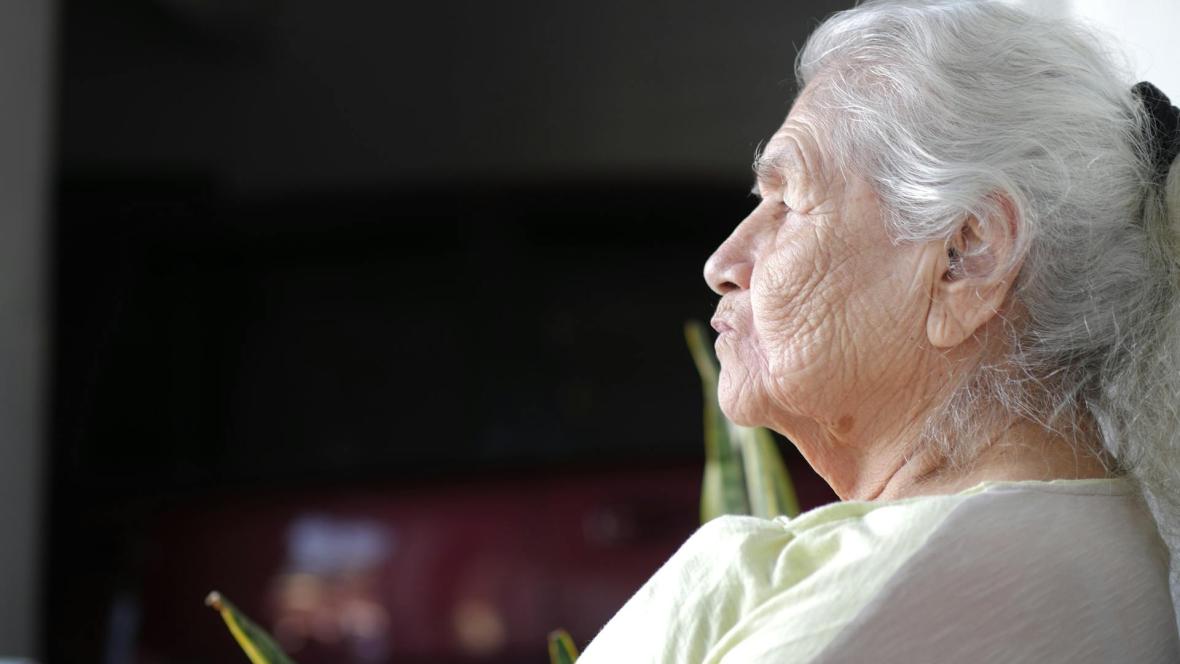
The central problem is not a lack of willpower. It is something deeper: the brain processes your future self in the same way it processes a stranger. The psychologist Hal Hershfield, from Stanford University, showed that your 75-year-old self is, literally, a stranger to your 40-year-old brain. We see ourselves as real strangers and, obviously, what sense does it make to do things for a stranger?
That is why I am going to propose a simple exercise that will help you get closer to your future Self, that stranger you should become friends with as soon as possible. AI is going to help us: upload your image to the AI you usually use and include this instruction: “this image is me right now and I want to know what I will look like when I am 60, 70, 80, or even 100 years old.” Wait for the result and observe it. That is a possible version of you in a few years. Analyze what you feel when you look at yourself and try to be empathetic with yourself, because that Self is going to need all your help to become the best version of itself.
The Present Bias: The Silent Thief
On the other hand, our brain tends to prioritize immediate rewards over future benefits, a phenomenon widely studied by psychologists, economists, and neuroscientists that is known as hyperbolic discounting or present bias.
Our limbic system activates intensely in response to present stimuli, while the prefrontal cortex, responsible for rational planning, works in a slower and colder way. In a duel between today’s pleasure and tomorrow’s security, pleasure almost always wins, and the practical consequence is devastating. That explains, for example, why, although almost 60% of adult European citizens acknowledge being concerned about whether they will have enough money in retirement, there has not been a significant increase in savings rates in recent years. Present bias explains that gap between intention and behavior.
Loss Aversion: Why Change Hurts
Allocating part of your salary to a retirement plan is perceived psychologically as a loss, not as savings, and losing hurts us 2.5 times more than an equivalent gain makes us happy. This bias, documented by Kahneman and Tversky, has direct consequences for planning for old age: the brain registers it as a wound, even though in rational terms it is exactly the opposite. It does not matter that, thirty years from now, that money may be the difference between dignity and dependency. The brain only sees what it loses today.
Now that you already know these two biases, I ask you: Are you saving enough? Could you save more? And I propose an exercise: automate your savings so you leave no room for harmful biases. Set up a monthly transfer to a savings account or retirement plan on the same day you receive your paycheck. What the brain does not see, it does not miss.
The Optimism Bias: “It Won’t Happen to Me”
The optimism bias makes us think that, in the future, we are less likely to experience certain negative events. In general, it is hard for us to see ourselves as older people with limitations: we imagine ourselves as attractive, healthy, and active older adults, like the ones we usually see in advertisements, not like those poor people who barely make it to the end of the month with their limited pension.
This bias is especially dangerous because it has the appearance of a virtue. The optimistic person seems resilient, positive, vital, but what that person is actually doing is indefinitely postponing a plan that is urgent. And you, how do you see yourself: younger and better than others?
The Status Quo: Staying Still Is Also a Decision
Most people either do not plan, or they plan poorly, for the final stage of their lives because they are unable to organize themselves in an environment of uncertainty or because they suffer psychological or social blocks as a consequence of their education and environment. We tend to accept what is given to us and to continue with what we have always done, and this prevents us from incorporating new habits into our lives, such as saving.
However, inertia is not neutral: every year that passes without planning for old age is an active decision not to do so, even if it feels like a non-decision. And you, which group are you in? The one made up of those who move forward, or those comfortably placed in their comfort zone? Decide and inform your loved ones of what you are going to do — open that retirement plan, review the will, make an appointment with an advisor, go to the notary, etc. Public commitment activates mechanisms of consistency that private decision does not activate.
What Works: Designing Against Your Own Biases
Behavioral science cannot give us more years, but it can help us make the years we do have be lived with agency and not with fear. The brain that sabotages your planning is not your enemy: it is an evolutionary organ doing its job. Your job is to understand how it works so that it does not run on autopilot but is instead directed by you. Start making decisions now and do not let your biases dominate you.
Written by: María Jesús González Espejo
¿Quieres que te recomendemos más artículos en base a tus lecturas anteriores?