¿Quieres un resumen de este artículo?
Why do we keep measuring healthy ageing almost exclusively in terms of physical performance? Daily steps, grip strength, VO2 max. They’re useful data, I won’t deny it. But we miss something when we reduce old age to a set of biological markers.
The 1st Healthy Ageing Olympics will take place this coming 19 September in Chantada, a municipality in the province of Lugo, right in the heart of the Ribeira Sacra. What captivated me about this Galician initiative is that it puts a race and a game of dominoes on the same podium. And not as a charming gesture or a simple “activity for seniors”, but as a statement of intent. Ageing well isn’t just about keeping the body moving; it’s about maintaining the place one holds in the lives of others and in one’s own.
I think about my own experience with my grandparents. I don’t remember any particularly “important” conversation we ever had. I do remember the games of parchís, the Sunday lunches, the improvised snacks, the quiet moments between us while we watched TV. That kind of shared time doesn’t make headlines. It doesn’t produce longitudinal studies that are easy to cite. It only leaves the feeling of still belonging to something.
I also think of Esperanza Cortiñas, the godmother of these first Longevity Olympics in Chantada, who at 109 years old represents better than any statistic what ageing truly means. Her mere presence at the event says more about longevity than any indicator.
I believe this is the trap we often fall into when we talk about longevity — myself included, writing about the topic week after week — we turn healthy ageing into a list of individual tasks, as if it were purely a matter of willpower, of personal responsibility. And it is, but only partly.
What Chantada proposes is something else: that healthy ageing cannot stand on its own. It happens in community, in place, in bonds that cross generations. And that radically shifts the focus. It’s no longer just about what each older person does for their own health, but about what an entire community builds so that ageing within it is worthwhile: good habits, an ethic of care, empowering older people from the time they are young.
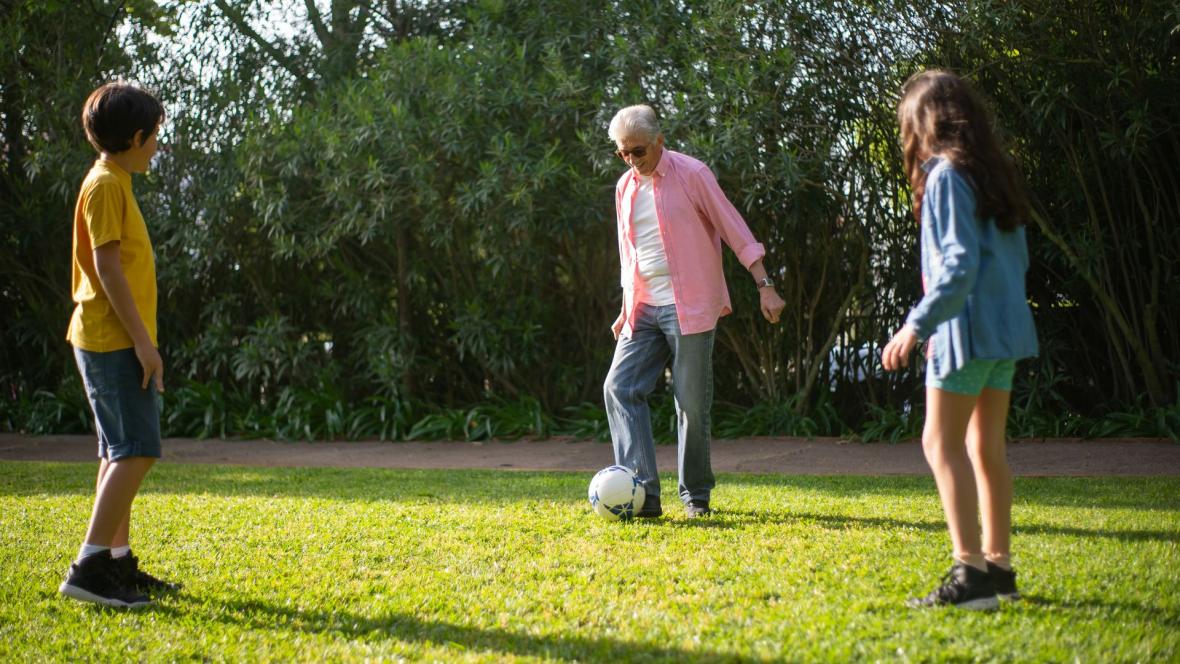
There is something almost radical about organising a day where a 109‑year‑old woman is the godmother alongside children barely six years old. It’s a way of saying that old age is not a separate stage, isolated and managed by specialists and relatives, but something that begins much earlier. Taking care of how we want to age is everyone’s business, and it starts today, at any age.
And here lies the most intelligent gesture of this proposal: it doesn’t require a trained body or a specific physical condition to participate. There’s room for those who run and those who walk slowly, those who throw a weight and those who prefer to move domino pieces, those who are 8 and those who are 90. It’s a competition designed so that no one is left out because of age, ability or pace. That is, to me, the true achievement: that “Olympics” stops sounding like exclusion and starts sounding like a place for everyone.
So, if anyone feels inspired and enjoys being surrounded by nature, by an incredible landscape, tasting good wine in good company, listening to interesting people, doing sport and activities like chess or dominoes, and sharing hopes and experiences… mark the date in your calendar: next Saturday, 19 September, in Chantada. There are still spots available to sign up for the 1st Healthy Ageing Olympics.
¿Quieres que te recomendemos más artículos en base a tus lecturas anteriores?