The Empty Nest… That “Fills Up” Again. Between Nostalgia, Relief, and Family Tupperware
Traducir artículo
¿Quieres un resumen de este artículo?
“When my kids come over, I get really happy… but when they leave, I’m even happier,” a woman told us, laughing. We were conducting the first focus group for my thesis, and without meaning to, the topic of housing turned to children — those who return and those who seem to never fully leave. They talked about it with humor and funny, specific anecdotes, mixing affection and a certain sense of relief when discussing the children who moved out (not always completely). It turns out that the so-called “empty nest” — that moment when children leave home — isn’t always so empty, or so final, or as dramatic as it’s made out to be.
At a time when the return of adult children to their parents’ home is becoming more and more common — for economic reasons, caregiving needs, or simply due to life readjustments (separations, divorces, moving back to one’s hometown) — the traditional narrative of the empty nest has lost some of its weight. Older adults do mention a certain emptiness when children first leave, mostly because of what it symbolizes (“my children are grown; they don’t need me anymore”). But many times that void is quickly filled: with frequent visits, daily phone calls, shared meals… or with their return, suitcase in hand. It’s a Mediterranean trait, very Spanish, when we compare it to how this plays out in other countries.
As I was studying — and especially when I started reading about the defining aspects of old age — different authors referred to the “empty nest syndrome” as something that particularly affected women and specifically marked their entry into old age. This term refers to the set of emotions, identity changes, and shifts in family dynamics that parents — especially mothers — experience when their children leave home. The term is commonly used in developmental psychology, family sociology, and gerontology to describe a transitional life process that may involve feelings of loss, loneliness, lack of purpose, or alternatively, freedom and personal renewal. In short, a big topic.
But when I started asking questions, indirectly exploring this issue, it turned out that the “inner weeping” of parents who had watched their little birds fly the nest wasn’t really there. One man told me (literal quote): “Now I’ve got things really tight… They came back, and there’s not even room for a pin in the house. I’m dying for them to find a job, each go their own way… and for the two of us to finally be left in peace.” The laughter that accompanied this didn’t hide an undeniable truth: prolonged or renewed cohabitation with adult children (who have their own lives) isn’t always idyllic. Sometimes it means sharing tight spaces, losing autonomy, or living in a sort of daily chaos where, for example, things mysteriously disappear (“I leave it right here… nobody touched it… and yet it’s gone”).
That said, and even if their return disrupts the household, I’m not saying (nor do they) that their departure goes unnoticed or is easy (such is the wonderful contradiction of being human). “When they leave, you really feel a big emptiness,” another woman told me, even as she acknowledged the reclaimed space that came back to her life after the youngest moved out. The relationship with children — whether they are present or absent — continues to shape day-to-day life, emotions, and even the way one narrates their own biography. Especially for women (those authors I read were right on this), life milestones are measured by the children: when they arrived, when they left, when they came back. They’re like an emotional calendar organizing the passage of time.
Some of the quotes gathered during my interviews show the enormous variety of possible experiences:
“My kids are still at home… although one of them is on and off [laughs].”
“I’m perfectly fine being on my own.”
“I’m not alone. I can’t be, I just can’t [because her kids never left home].”
“When I lived alone, I was happy, comfortable, at ease.”
For some older adults, the supposed loneliness of the empty nest is not a threat, but a victory. For others, living with someone — even if not always easy — is an emotional necessity. And for many more, the key lies in maintaining a balance between closeness and personal space, between affection (likely the key factor) and autonomy. And space!
Family solidarity is still very present in our Mediterranean society, but it has changed shape. It no longer expresses itself — contrary to what some international statistics might suggest — through financial transfers, but rather in everyday gestures: kids coming over to eat at their parents’ house, making daily calls, helping out… or moving back in temporarily (or indefinitely). This solidarity, however, is not always symmetrical. If kids eat at their parents’ to save money, who pays for it? Who cooks? Who adapts to whom?
The answer is often clear: the older adult, who is almost always the mother. That’s why we also need to reflect on how the feminization of care doesn’t end with retirement. Mothers keep feeding, welcoming back into the home, organizing… and prioritizing the well-being of their children over their own. Even when that means giving up the order or freedom they recently regained (or experienced for the first time, in some cases).
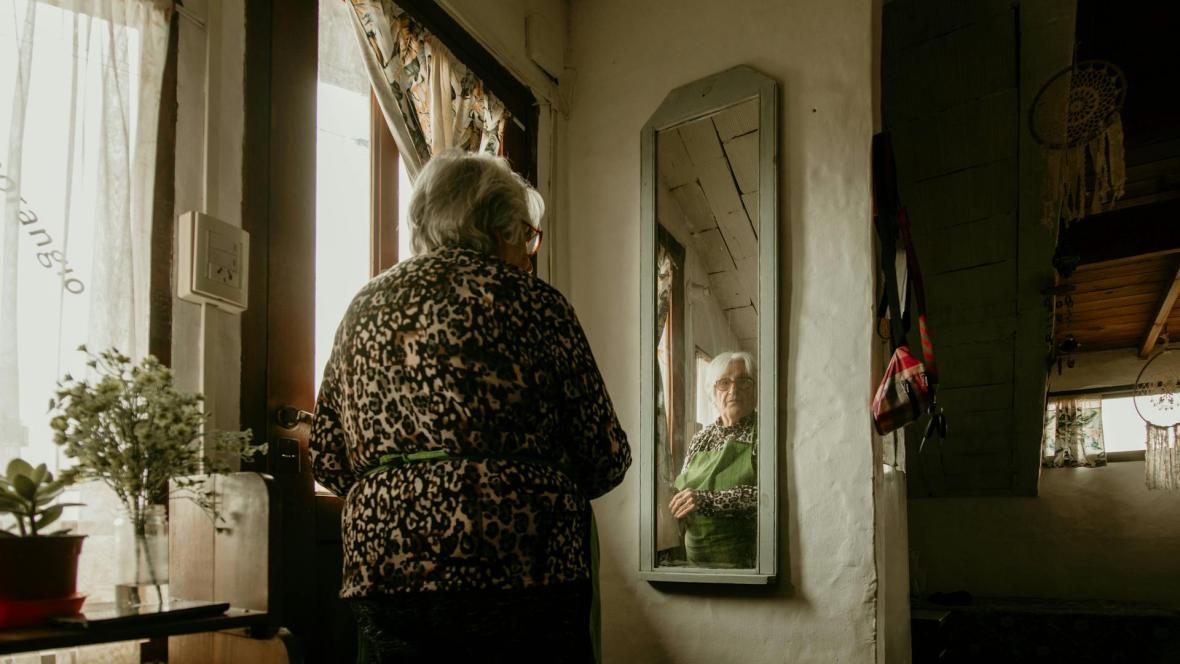
“I’m perfectly fine being on my own,” another woman told me. She expressed with that statement a desire (and a right) to have her own space, her own routine, her own rhythm — one not tied to others’ schedules. To not have to explain herself, to not have to cook when she doesn’t feel like it. To not have to find things that were never really lost.
The “nest” can empty, fill back up, reorganize itself. What matters isn’t whether there are kids at home or not, but whether the older person can decide how they want to live that phase. With company or without. With daily calls or occasional visits. Cooking for everyone or setting limits. Because aging in society also means being able to choose how much you want to give, to sacrifice, to stay autonomous.
¿Quieres que te recomendemos más artículos en base a tus lecturas anteriores?