Thinking about the city for old age: spaces that care
Traducir artículo
¿Quieres un resumen de este artículo?
This text is based on an academic work that I wrote together with Mercedes Jones and that forms part of the book Soledad (es) Diversidad y desigualdad, which has just been published. I share it here in a more open version, intended to reflect on something we see every day, even if we do not always know how to name it: how the shape of our cities can push people toward loneliness, especially (though not exclusively) in old age.
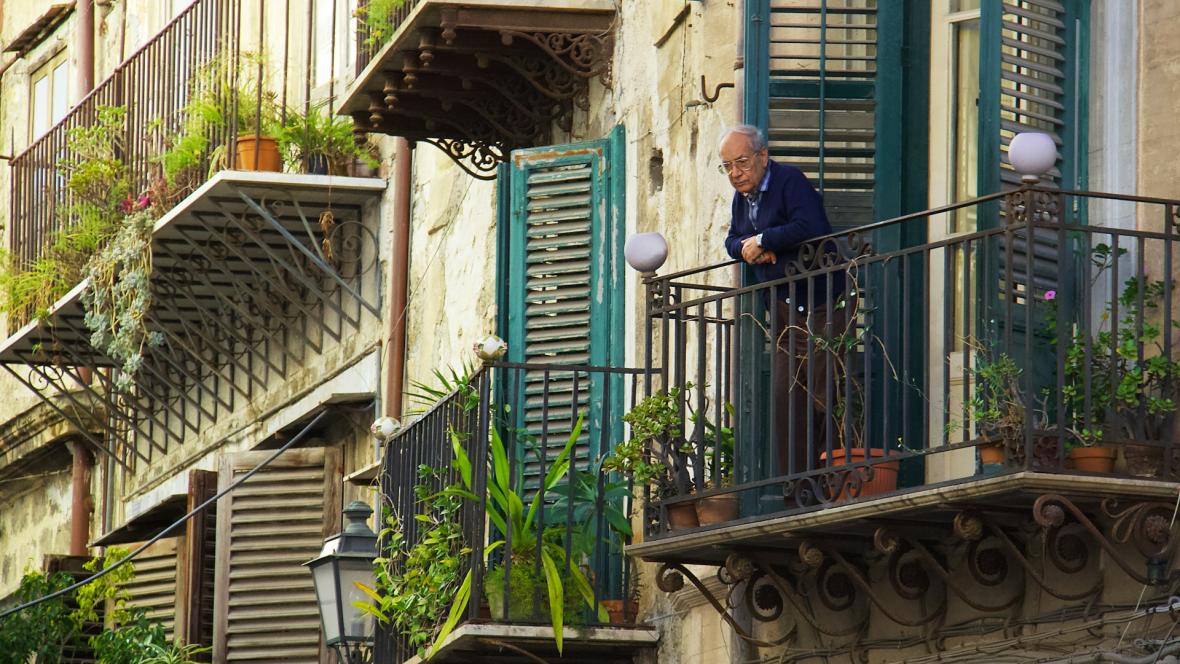
Although (as I have insisted in other posts) all of us can suffer from the lack of accessible and welcoming public space (“friendly,” as we sometimes say), it is older people who feel it most. The fact that cities are becoming less and less friendly (although perhaps they never were) is due to the fact that they are designed mainly for cars: narrow sidewalks, very long traffic-light crossing times, nonexistent benches, constant noise. This approach to the city not only makes it harder to move from one place to another (to enjoy the city), but also makes it harder to “stay,” to simply be. And when going out into the street becomes uncomfortable, difficult, or unattractive (or even unsafe), the risk of isolation increases.
Thus, it is no coincidence that older people are increasingly affected by unwanted loneliness, especially at very advanced ages. The environment matters. A lot. When the neighborhood stops inviting people to go out, to sit, to look around, to greet others, everyday interactions diminish, and with them that fabric of social relationships that reminds us who we are (I have spoken about this here).
Over time, the way we use the city can gradually “shrink” until our daily walks are limited exclusively to our own neighborhood. That is why it is so important for neighborhoods to be accessible and friendly: they are where bonds are built, where we participate, and where we exercise continuity of our identity. Feeling part of a neighborhood is a fundamental basis of sociability and participation in old age.
When public space is poorly designed (or when it disappears, “devoured” by terraces, or expels us through its new configuration), something else that runs through our society is also lost contact between generations. And with it, many of its benefits. The street, the square, the park are places where ties are created beyond family relationships, beyond obligatory ones: from close, intimate relationships to those softer familiarities—more or less explicit greetings, small, shared routines, such as taking our dog for a walk—that make the neighborhood feel like part of ourselves. It is not so much about knowing one’s neighbor as about recognizing them as part of our daily life. That everyday coexistence is a form of inclusion and, at times, of support and silent solidarity. It is, in fact, the foundation of our current society.
But for all this to happen, accessible and well-maintained public spaces are needed, with benches, shade, green areas, and also “blue” spaces—fountains, water points—that invite people to stay. However, in many cities these spaces are insufficient, unevenly distributed, and poorly designed for those who walk more slowly or with greater difficulty.
In practice, this represents a silent violation of the right to the city (I have spoken about this here). We are not always talking about major physical barriers: sometimes they are deterrent designs, deteriorated pavement, obstructed sidewalks, uncomfortable or nonexistent street furniture. Or forced coexistence, in minimal spaces, between pedestrians, bicycles, scooters, and cars, with the danger and insecurity that this entails. All of this ends up expelling those who most need these spaces (since they are more dependent and do not travel by car) and favoring increasingly privatized uses accessible to only a few (mainly tourists, not residents).
A clear example is the unequal distribution of green spaces, even within the same municipality such as Madrid (I have spoken about this here). This inequality is a matter of spatial justice: if not all people have the same opportunities to access spatial resources that improve life, the city has ceased to be adequate for them. And this has direct effects on the quality of life of older people, on their physical and mental health, on their everyday habits, and on their sense of belonging. On their lives.
Having accessible, well-cared-for public spaces designed for a long-lived population is key to feeling part of a place and to ensuring that relationships between generations occur naturally (perhaps this would mitigate certain almost hateful discourses that I increasingly read on social media). We call these spaces enabling environments: those that facilitate sociability and relationships beyond the intimate circle. When they are lacking, loneliness and isolation are a logical consequence of the environment. Loneliness is then imposed.
This can reach very concrete extremes: older people who stop leaving their homes because walking in their familiar surroundings becomes increasingly difficult. And this is without even mentioning the stress caused by the growing touristification of our cities, the massive bachelor and bachelorette parties dancing choreographies in the streets, and other activities that seem to turn neighborhoods into small amusement parks.
From all of this emerges an idea that seems key to me: in our cities there are not only people who feel lonely; there are also cities that predispose people to loneliness because they lack the enabling environments I have referred to. They are poorly designed cities, poorly maintained, and, ultimately, cities with little or very negative management of longevity.
When an age-based and intergenerational perspective is not incorporated into urban planning, well-known problems are perpetuated: exclusionary designs, deterioration of public space, and invasive uses that expel those who need it most. And a major inconsistency is created between international discourses about “age-friendly cities” or “caring cities,” the idea of “leaving no one behind,” and the everyday experience of many older people, but also of others with mobility problems and other difficulties.
A well-designed city allows all of us to be present, without our value in space depending on our vehicle or how much money we have in our pockets. Thinking about the city for older people would mean an improvement for people of all ages.
¿Quieres que te recomendemos más artículos en base a tus lecturas anteriores?