
¿Quieres un resumen de este artículo?
I read with some surprise an article published in a national-circulation newspaper about care. The author of the article comments that caring “has become difficult” and refers to the speed of today’s society, but also to the controversies of caring, referring to the eternally repeated “but caring is beautiful” and, in more or less explicit ways, to the psychological difficulty of the process of caring. He also refers to the logistical difficulty within the framework of a society that (the author does not refer to this) is marked by the “productivist” logic of capitalism. And, without disagreeing with any of these matters referred to by the aforementioned article, my mind orbits around this idea of “now it is difficult to care,” as if before, caring had been “sewing and singing,” as the saying goes.
How unfair we are, as a society, when we maintain those beliefs that “any past time was better.” Be careful here when it occurs to us to think that “how difficult it is to care now.” Now there are a series of logistical complications, without a doubt, that are specific to our social context. But the great difference is that now we talk about it.
That silent burden of care has stopped being silent. Silent, I mean, because a burden it was, it is, and it will be. It will continue to be a burden because there are psychological dimensions in caring that intertwine with the logical exhaustion involved in sustaining the life and well-being of others. It will continue to be a burden because in caring there occurs, almost inevitably, a forgetting of the person who cares. A forgetting by others, but a forgetting even by oneself. By herself, because statistics and everyday experience continue to point in the same direction: care continues to have gender.
I place emphasis here on gender because it is something that surprises me and bothers me deeply. Even when care is shared, and although we talk a lot about co-responsibility or similar words, the hardest, most invisible aspects - even the most thankless! - of care continue to fall on women. This happens in the raising of children, in the care of babies. Although men participate more than in former times and have greater involvement than previous generations, real equivalence continues to be more established on paper than in practice and they continue not to be equivalent. It also happens in domestic tasks, which are also part of invisibilized care: when your 70-year-old mother makes cocido and Tupperware containers for the week, she is also caring for you. But it happens in a much more extreme way when we analyze the care of dependent people; there that male presence is still very small (even if there are patterns of change that I do not deny).
My point here is that the hardest parts of care continue to be assumed as an extensive part of love and love, as we know, has no price, which in the context of our society - where what is valuable is quantified numerically - means that, in reality, it is worth nothing. Because what is done out of love, it seems, takes no work.
But let us return to the care of parents, to the care of old age, to the care that is in reality the hardest and the heaviest. Caring for a baby is hard, because ignorance, anxiety, the tiredness of a pregnancy and a birth (I speak from one of the perspectives, obviously, and with all the biases of which anyone may want to accuse me) and of the sleepless nights are mixed together, but also the internal change itself, what it means at a personal level that a little person depends completely on you.
But there is a fundamental difference: it is care directed toward “growth,” in which you can see the reflection of your care. It is care, forgive me the expression, upward. You care for someone who one day smiles back at you. And it is already like that every day.
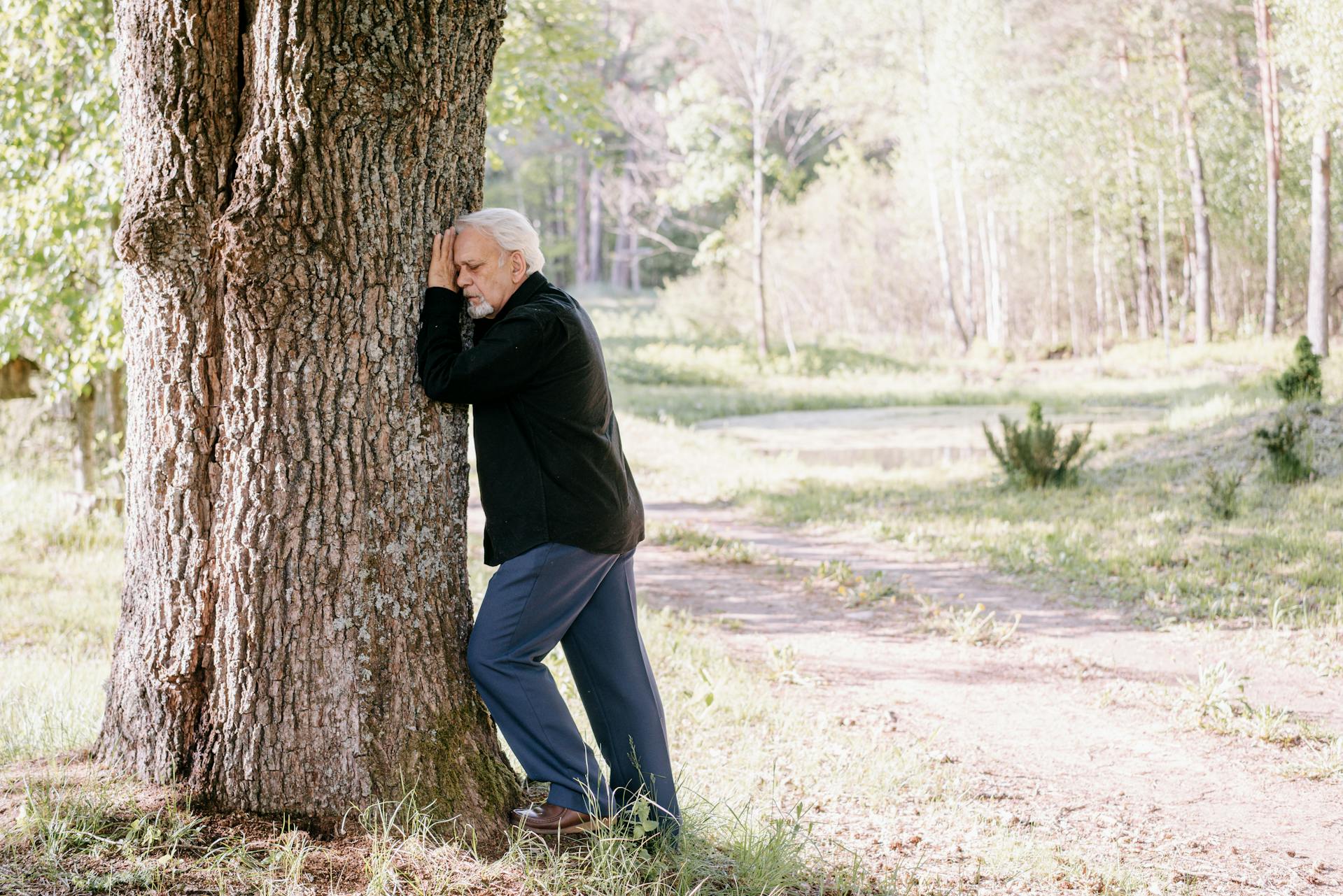
Caring for someone who has stopped existing within themselves, someone who no longer recognizes you, someone who has stopped interacting with you or does so within a new framework (in which you have stopped being recognized and contextualized in your shared history), that has a special harshness.
Faced with the arrival of a baby and with the burden of care as a mother (again, here is my bias), you have to recognize yourself in that new person you become. You are a new person who now has a new being tied to an invisible umbilical cord that — I suspect — will never be cut again.
However, when caring for someone who has lost their own self — someone who no longer remembers that symbolic cord that united you both indissolubly —, we are talking about a totally different matter. It is no longer only about caring for a fragile body, for a dependency that increases or for more complex needs, but you have to assume another change: that of the cared-for person. You care for someone who sustained your life when you could not sustain it, although perhaps they no longer remember that they did.
And to what I am getting at: this inversion of roles, psychologically, is not now harder than before. What happens is that now we can talk about it, and before, those who went through it (probably that same person I refer to and who has lost themselves), could not. Because it was not right, it was ungrateful, it was not correct, it was not Christian or any other social matter that added an exhausting weight onto the shoulders of anyone who dared to feel bad about caring.
Here I make a necessary aside; it is not the same to care for someone who needs a little help with daily tasks as for someone who needs help with absolutely everything, even the most intimate matters. The word “caring” gathers a variety of situations and, when we subsume all of them under the same reality, we are being somewhat unfair.
There are forms of care that accompany an autonomy that is still possible, and others that enter into an increasingly profound dependency. In the latter, moreover, care does not go “upward,” it does not accompany growth or a progressive conquest of independence but takes place in a context of loss. The cared-for person needs more and more help, or increasingly complex help, while the person who cares witnesses that deterioration almost always from very close by. And how hard it is to see the person one cares for fade away.
What is my point in all this? Perhaps I simply want to remember that caring always takes place within a framework of hardness, of tiredness. Caring tires, weighs, exhausts us and disorders us, even changes us. I do not believe there is easy care, neither in child-rearing, nor in old age, nor in illness, nor in dependency.
But I do think that we need to have some sensitivity when we address care, understanding that the frameworks of care are different. Not all forms of care are the same, not all weigh in the same way, and not all are distributed with the same justice. Also, because we usually see the burden very clearly when it is our turn to care, but we tend to minimize it when others care. As if from the outside it always seemed simpler. As if the tiredness of others’ caring were less tiredness.
¿Quieres que te recomendemos más artículos en base a tus lecturas anteriores?