
The family cannot continue to be the invisible ministry of care
Traducir artículo
¿Quieres un resumen de este artículo?
In this interview with La Razón, Juan Martín, director of CENIE, argues that Castile and León, Spain, and Portugal can become the European laboratory for longevity societies and calls for more prevention, investment in care, and a new social model.
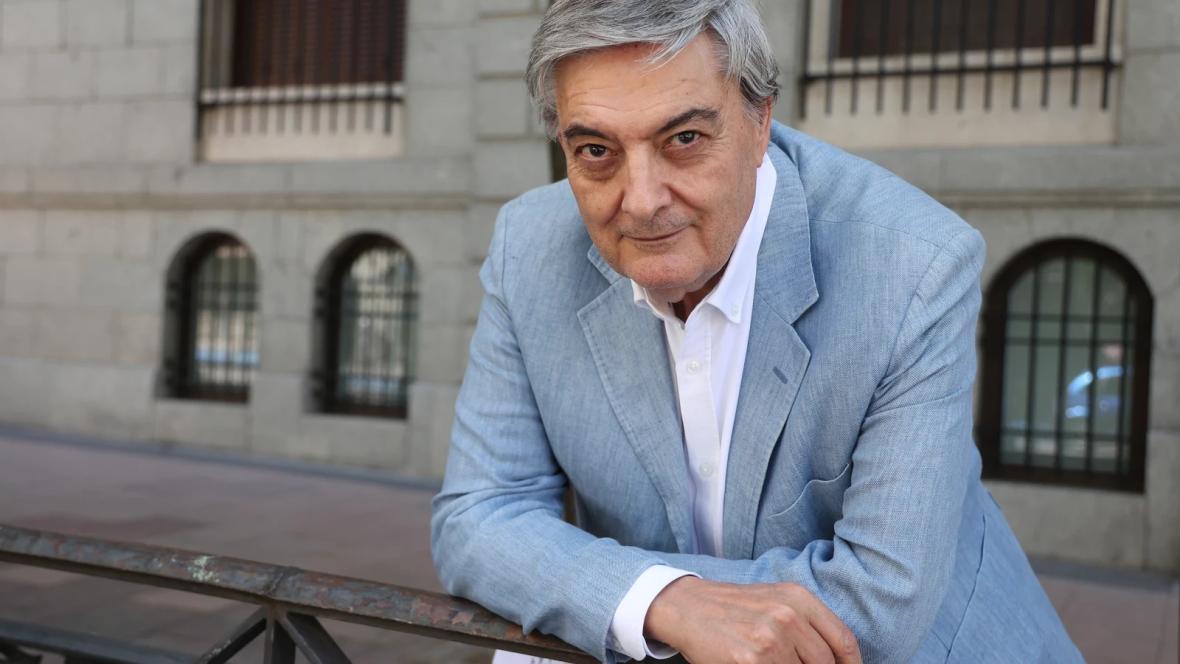
People are living longer than ever before, and this makes it necessary to rethink care, health, cities, the role of families, and even the economy. This is the view of Juan Martín, director of the International Centre on Ageing (CENIE), a knowledge hub promoted by the General Foundation of the University of Salamanca, which cooperates with the Economic and Social Councils of Spain and Portugal, together with the Polytechnic Institute of Bragança. Martín warns that “the family cannot continue to be the invisible ministry of care” and calls for care to become one of the major pillars of the new Welfare State. In this context, he says that Castile and León is “on the front line” of Europe’s major demographic challenge and maintains that Spain and Portugal can become an international benchmark for longevity societies. He also insists that prevention will be key to sustaining the health and social care systems and states that delaying frailty and addressing chronic diseases could save more than €3.5 billion annually through avoided hospital admissions and medical consultations.
For a long time, talking about ageing meant talking almost exclusively about dependency. What changes when we begin to talk about longevity and longevity societies?
The first thing that changes is the mental framework. For decades, we have looked at ageing almost exclusively through the lens of illness, dependency, or public spending. If you look at a longer life only through its final stage, you miss the whole film. Talking about longevity means recognising that living longer is a collective achievement—of medicine, education, living conditions, and public systems. But it also raises a very serious question: are our cities, our jobs, our care systems, our housing, and our relationships prepared for longer lives? A longevity society is not just a society with more older people; it is a society that must reorganise itself for longer lives. The real challenge is how we organise societies capable of responding to this new reality. That is why we talk so much about healthy life expectancy, which is not just about living longer, but about living better, with autonomy and quality of life.
What exactly is the longevity economy, and why will it be one of the major future challenges for countries such as Spain and Portugal?
We constantly hear the term “silver economy,” which is essentially the identification of a market niche that gains importance as the number of people at older ages increases. But the longevity economy, which we believe is key, looks at the economy from a different perspective. We live longer, and that changes everything, but we are not talking only about pensions or healthcare. We are talking about how a society adapts to longer lives: how we work, how we care, how we live, how we consume, how we learn. In this respect, Spain and Portugal are particularly long-lived societies, and this can become a strategic opportunity. What happens on the Iberian Peninsula will probably anticipate the future of much of Europe.
CENIE has just presented the study “The Right to Care and the Care Economy in Spain.” What led you to promote this research?
If we live longer, we need systems that accompany us better in situations of frailty, dependency, or loss of autonomy. And we wanted to approach this from two angles at the same time. First, from the perspective of rights. Caring and being cared for cannot depend on whether you have a family available, sufficient financial resources, or live in a region with more means. Second, from an economic perspective. Care is not a hidden burden within the home; it is a central part of well-being and economic activity. That is why the report develops this idea: care as a social right and as a strategic dimension of the well-being economy.
The report states that caring and being cared for cannot depend solely on the family or on each person’s economic capacity. Are we facing a paradigm shift?
The shift is from understanding care as a private, almost domestic matter to understanding it as a collective responsibility. The family is important, of course, but it cannot continue to be the invisible ministry of care. For decades, we have operated under a kind of fiction: whenever there was a woman available at home to provide care, a solution was found. Of the 1.3 million declared formal jobs in the care sector, 87% are held by women. But that fiction is no longer sustainable, and it is also deeply unfair. The new paradigm is clear: we must care and be cared for throughout life, because we will all find ourselves in both situations. But it must be an effective right, not a family, territorial, or economic lottery.
In the study, you describe care as a basic infrastructure of the Welfare State, on a par with education or healthcare. Why is this approach so important?
Because we are talking about the fourth pillar of the Welfare State, which needs to be updated. The demographic change taking place forces us to think about a new and different society. Until now, we have structured our lives in a very simple way: one stage devoted to education, another to work, and then retirement. At the beginning of the 20th century, life expectancy in Spain barely reached 34 and a half years; today it is 84 years. This changes everything. When we speak of 65 as the threshold for retirement, we must remember that people still have 25 or 30 years ahead of them. Long-term care is essential for longevity societies. And we are not talking only about severe dependency, but also about preventing frailty, maintaining autonomy, and sustaining life projects. An advanced society cannot leave care exclusively in the hands of families. We are talking about support for people who need help over prolonged periods to carry out basic activities of daily living. But the concept is much broader and includes home care, personal assistance, community support, telecare, or more humanised residential care. The great challenge is to move from a highly assistance-based model to a more personalised, person-centred one.
One of the most interesting ideas in the report is that care is not only a social expense, but also an economic investment.
Care generates economic and social value. When a person receives good care, they maintain autonomy for longer and reduce hospital admissions; when a family is not overwhelmed, it can continue working and developing its life project; and when the sector is professionalised, stable, local jobs are created that cannot be relocated. The study shows that investing in care prevents higher costs later on. Care costs money, yes—but not providing care costs much more.
Are there too many differences between territories when it comes to access to care or services?
Although there is a common national framework, in practice there are very different regional models of dependency care. Differences appear in coverage, spending per beneficiary, processing times, co-payments, service intensity, and working conditions in the sector. In other words, real access to care still depends too much on where one lives. There are significant territorial differences, which is problematic because a right should not depend on a postcode. For example, the report shows that Castile and León has much faster administrative processing than other regions, but sometimes administrative speed is not everything. In a region as aged and geographically dispersed as Castile and León, the major challenge is ensuring that services reach all areas with sufficient intensity, especially rural areas. There is a paradox whereby demand is greatest in places where fewer resources exist to meet it. Territorial diversity in our country is an element that must be addressed and corrected, as it generates inequalities.
Can Castile and León become an example of what Europe will experience? To what extent has it already begun this path towards the longevity economy?
Castile and León, Spain, and Portugal are not only ageing territories; they are territories that can anticipate what Europe will look like in a few decades. The Iberian Peninsula can become a reference space for healthy longevity. What happens here in terms of care or healthy ageing will be very useful for understanding how many European regions will need to reorganise. In general, our health systems are designed for illness, for curing. Primary care users are those who already present symptoms or developed pathologies, and then hospital care appears. But in reality, if we talk about healthy and active ageing, we need to anticipate and care for ourselves from the very beginning of life. Everything that helps to reverse, delay, or improve the conditions in which we reach certain ages has a direct impact on our health.
We are talking about ageing well, then?
Exactly. In this sense, Iberlongeva proposes identifying the stages prior to frailty—what we call pre-frailty—and frailty itself, since frailty is the gateway to dependency. When dependency appears, everything changes. We need to develop a third pillar—which for us is the first pillar—namely prevention. This means maintaining physical, cognitive, emotional, and social autonomy for as long as possible. In Spain, life expectancy is 84 years, but healthy life expectancy is only around 61 or 62. The challenge is no longer just to live longer, but to ensure that those additional years are lived with quality of life and well-being. Prevention is probably the great strategic investment of the future. Studies indicate that adequate preventive systems could reduce hospital admissions associated with five major chronic diseases by 6.3%. That would mean more than €3.5 billion a year in avoided hospital stays and medical consultations. But beyond the economic savings, we are talking about millions of people living better and longer with autonomy.
What should the transformation of the model be?
Care must be more personalised, more community-based, and more person-centred. This means stopping the organisation of the system around administrative structures and starting to organise it around people’s real lives. Future care should prioritise the home whenever possible, strengthen community support, develop personal assistance, coordinate healthcare and social services, support families without abandoning them, and transform residential care into smaller, more homely, and more respectful models. We need to move from an assistance-based model to a person-centred, community-based model with a human-rights approach.
Source - La Razón
¿Quieres que te recomendemos más artículos en base a tus lecturas anteriores?