
A Cover for Hundred-Year Lives: When Age Tells a Different Story
Traducir artículo
¿Quieres un resumen de este artículo?
A reflection on the article by Jesús Ruiz Mantilla in El País Semanal

Last Sunday, El País Semanal published an article titled “Tough Lives and Days of Wine and Roses: The Secrets of Spain’s Centenarians”, written by Jesús Ruiz Mantilla. Across its pages, more than just a portrait of longevity unfolds with delicacy and depth, it maps out a constellation of lives that have crossed the century mark without losing sight of what lies ahead.
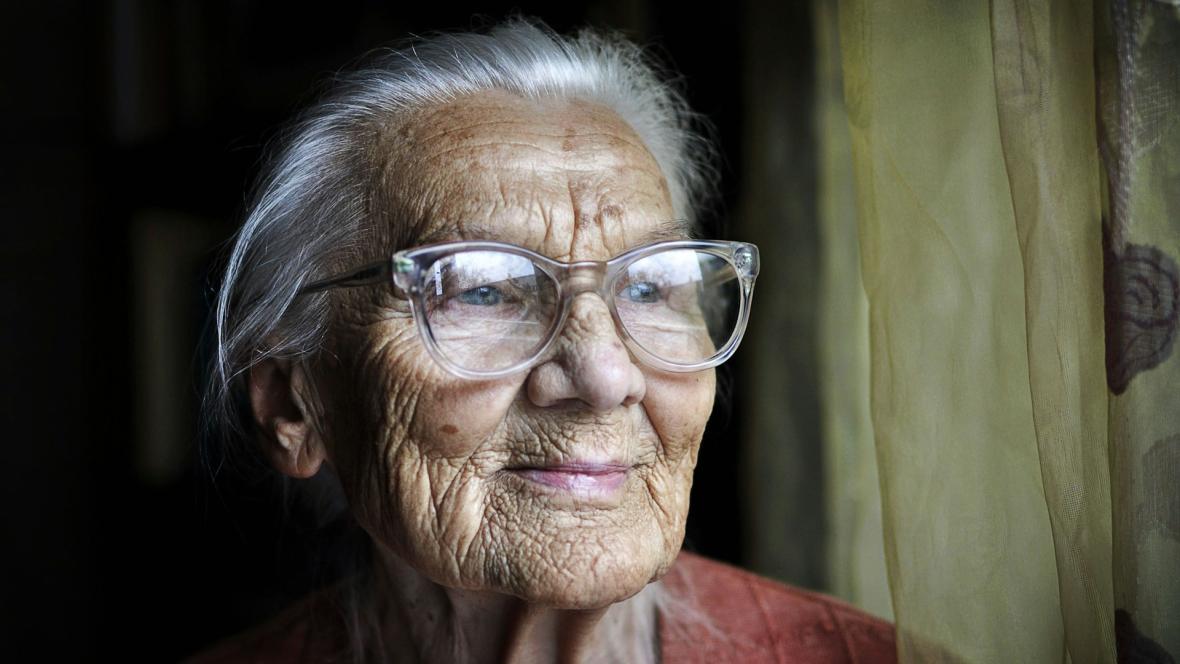
Josefa, Esperanza, Domingo… These are real names with recognizable voices. They live beyond one hundred years not under the weight of the extraordinary, but within the continuity of the human. They speak of their work, their losses, their habits, their ideas. They are not defined by their age, but by their biography. The article — accompanied by photographs that invite us to pause — gets the essentials right: it doesn’t romanticize, infantilize, or mythologize. It listens.
Among the data shared, we are reminded that in 2024 more than 16,000 centenarians lived in Spain, and that in the next 50 years that number could exceed 230,000 if the current trend continues. The figure is not meant to alarm, but to draw attention to a profound transformation already underway. Like it or not, longevity has ceased to be a biographical exception and has become a structural dimension of our societies.
What matters is not living longer, but living with meaning
For decades, the debate on aging has oscillated between concern over dependency and the praise of active aging. But reality, as the article shows, is richer and more complex. There is no secret formula or single pattern. What exists are life trajectories woven through relationships, work, losses, routines, a certain discipline, and a — more or less conscious — will keep going.
To speak of active longevity is, in that sense, to speak of the conditions that allow each person to inhabit their time with dignity, safety, and meaning, regardless of the number of years they’ve accumulated.
Structural change cannot be improvised
The article also conveys an idea that resonates more and more across different domains: it is not enough to adapt what we already have to aging. We must rethink everything through the lens of longevity.
This means anticipating — not just correcting —: investing in prevention, redesigning care models, adapting urban environments, understanding nonlinear life paths, and ensuring that scientific, economic, and technological progress includes longevity as a metric of social success.
In this context, centenarians are not a rarity: they are a lucid warning and a learning opportunity. If they have made it this far, are we prepared for what’s to come?
A gaze that speaks to all generations
The merit of Jesús Ruiz Mantilla’s article lies also in reminding us that the future doesn’t start tomorrow, but in how we look today at those who have lived the longest. Every time we portray old age with compassion or condescension, we fail. But every time we manage to see it as part of “us” — and not as otherness — we take a step toward a more integrated society.
That is why this cover matters. Because it’s not a postcard. It’s a mirror.
A word of thanks
In a time, saturated with fleeting headlines, we thank a media outlet like El País for dedicating space, time, and care to telling these lives. And we are especially grateful to Jesús Ruiz Mantilla for having told them without embellishment, with respect, and with depth.
We hope this piece does not close a conversation but opens it in many other places: in homes, in health centers, in governments, in universities, in the media… and in every corner where we can still ask not only how many years we live, but how we want to live them.
What do we really mean when we talk about “aging well”?
¿Quieres que te recomendemos más artículos en base a tus lecturas anteriores?