Another Beauty Standard Is Possible: With Gray Hair, Wrinkles, and Diverse Bodies
Traducir artículo
¿Quieres un resumen de este artículo?
“Fighting” the signs of aging, “eliminating” wrinkles, or “reversing” the marks of time are expressions that dominate the language of cosmetics to sell supposedly “anti-aging” products. But… what does it mean to go against age? Isn’t not aging just another way of saying dying? We know this word, “anti-aging,” sometimes helps emphasize that something contributes to healthier aging. But language can be deceptive, and the fact that our words go against age or against growing older is yet another sign of the devaluation we apply to everything that gets older. It reflects the collective fear of anything that loses its shine or becomes wrinkled.
We’ve never had so many tools to slow down, conceal, or “edit” aging. We live under the dictatorship of appearance, imposed not only by the mirror but also by the screen. And this cult of youth doesn’t just shape advertising—it also affects the self-esteem of many people, especially women, who feel their worth decreases as they grow older.
In recent months, actress Ana Torrent has given voice to this idea with the Free from Ageism campaign by Fundación Grandes Amigos, aimed at the cosmetics world. “There are products for dark circles, under-eye bags, sagging skin… Everything’s anti-aging, because getting older just isn’t acceptable anymore, right?” she jokes in the promotional video. It’s a good point. Ageism is embedded in physical appearance, and it’s deeply ingrained in us that we must “stay young” to appear younger than we are. That’s why we dye our gray hair, stretch out our wrinkles, apply insanely expensive creams… Heaven forbid we look our age. And we all do it because for decades we’ve been taught that beauty is tied to youth—and youth is the passport to social acceptance, recognition, professional success, and validation in our environment.
One of the researchers who has spoken most about this topic—previously cited in this blog—is Anna Freixas, PhD in psychology, expert on women and aging, and author of books like Yo, vieja (Me, Old Woman, Capitán Swing). She is a strong advocate for naturalness and freedom, for not letting ourselves be led by social norms and beauty standards. “In the huge business that is women’s bodies, this is the harshest part of it all: how little affection women show for their own bodies, due to social mandates. There are still many beauty centers with ads for treatments that are absolutely outrageous. The ideal of beauty is perverse, and it has two main elements: youth and thinness. What we need is education about the body and health—not about beauty.” Freixas denounces that women’s bodies have become a commercial and cultural battleground, where self-acceptance is almost an act of rebellion. And she’s not wrong.
According to the study The Longitudinal Associations of Body Dissatisfaction with Health and Wellness Behaviors in Midlife and Older Women, by Lisa Smith Kilpela and others (2023), body dissatisfaction is prevalent in more than 70% of middle-aged and older women. The study also shows that this discomfort isn’t superficial: those who feel worse about their bodies tend to exercise less, have poorer sleep quality, and show higher levels of anxiety and social isolation. Aging, in a culture that idolizes youth, becomes an emotional and political challenge.
But in my conversation with Freixas, she also offered an optimistic view. “Now things are changing. At the gym, I see many women who work out for health reasons. On the street, I still see women wearing impossible shoes, but I also see others who embrace beauty in footwear that allows them to live more comfortably,” she told me in an interview. Something is shifting.
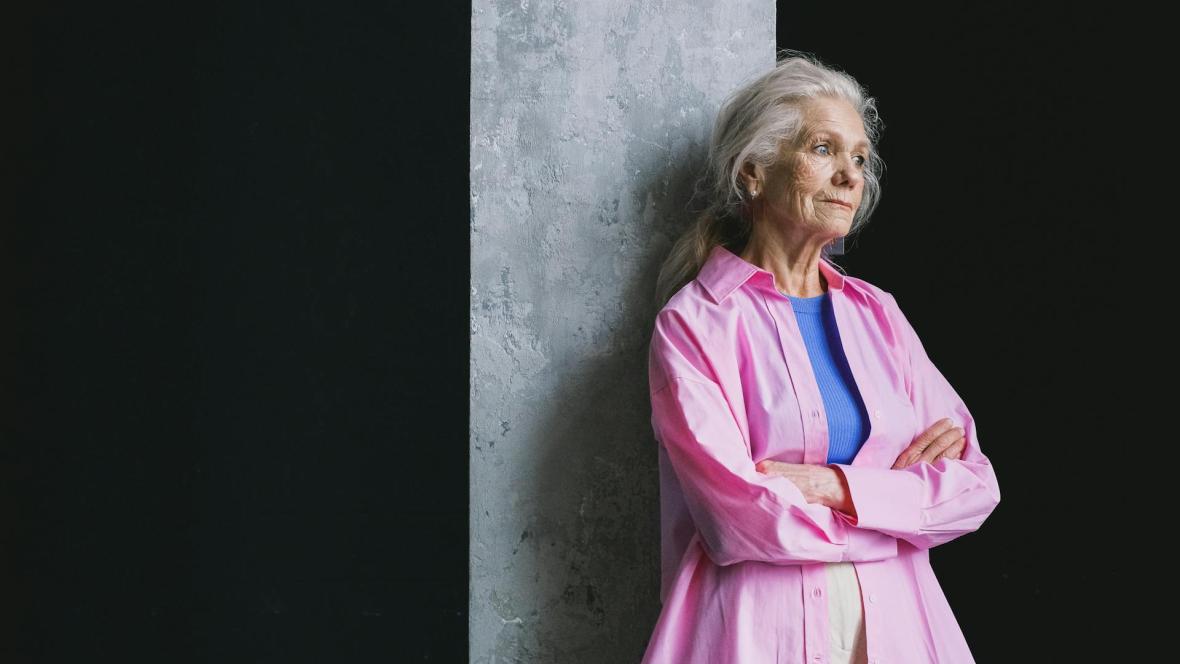
I smile when I pass by someone with a head of white hair and an empowered look. I love seeing a 70-year-old woman walking briskly in brightly colored sneakers, stylish and heel-free. These scenes break the mold, offering another way of valuing what’s beautiful. Scenes that are a bit rebellious, a bit defiant, and a lot powerful. Because body positivity arrived years ago to push back against the cult of thinness and to celebrate curves, love handles, and body-size diversity. And although this shift is also happening in how we view aging—with gray hair, wrinkles, and other signs of a lived-in body—this particular revolution is slower.
It’s true that more campaigns, brands, and projects are now promoting pro-aging—a vision of beauty that aligns with time instead of fighting it. In fashion, models like Carmen Dell’Orefice, Lauren Hutton, Jan de Villeneuve, or Stephanie Grainger—just to name a few—defy stereotypes and embody an elegance that doesn’t try to hide age but rather embraces it. In art and photography, creators like Ari Seth Cohen, author of the Advanced Style project, portray old age as vibrant and full of life.
Of course we want to take care of ourselves, eat well, exercise, and apply creams that bring moments of self-care and pleasure. Of course, we like seeing ourselves in the mirror and smiling proudly at what we are at 60, 70, or 80. But that “feeling good” about ourselves is still too conditioned by ideas of youth—tight skin, firm features, glowing complexion… Maybe those ideas need to fade away to make room for a broader, more inclusive concept of longevity beauty.
¿Quieres que te recomendemos más artículos en base a tus lecturas anteriores?