¿Quieres un resumen de este artículo?
The body takes time to realise it can finally stop. And that delay says more about us than the holidays themselves.
During the first days of a holiday, we don’t rest — we unwind. We keep checking our phones out of habit, we feel uneasy when the schedule is empty, and we take a while to understand that we can finally pause. Work stops before the body understands that it, too, can lower its guard.
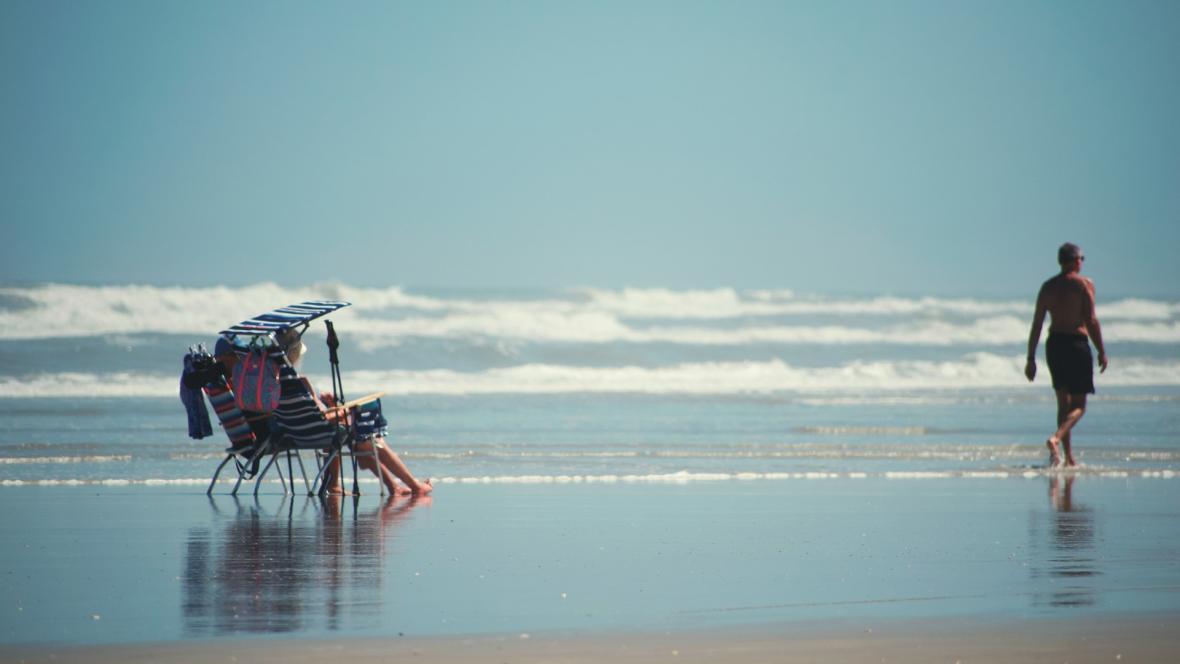
And then, almost without meaning to, something begins to happen. We walk without necessarily heading anywhere. We eat when we’re hungry, not when the clock tells us to. We sit under the morning sun. We stretch out an after‑meal conversation with friends. We sleep a little longer or, simply, live with a little less haste.
That shift is no coincidence. It’s the body recovering, for a few weeks, a rhythm that feels familiar — learned over hundreds of thousands of years of natural light, movement and communal life, long before calendars, screens or notifications existed. It doesn’t forget that rhythm during the rest of the year; it simply has very few chances to practise it.
Micro‑habits beyond summer
Dr Beatriz Crespo has spent years insisting that taking care of ourselves doesn’t necessarily require major transformations. In her book Healthy Micro‑Habits, she defends the value of actions lasting less than two minutes — so simple they barely require willpower: stepping outside into the light when we wake up, walking while talking on the phone, or turning off the screen when sleep appears instead of fighting it with another episode of the latest Netflix series.
Summer is, almost unintentionally, the best laboratory for trying out these small changes. Not because we have extraordinary willpower during holidays, but because we encounter less friction. Routines break on their own, and in the space that opens up, it becomes easier to introduce a new one. During the rest of the year, we need discipline to do the same. In August, by contrast, it almost happens effortlessly.
Perhaps that’s why summer works as a reminder of something deeper. Anthropologist Manuel Mandianes sums it up in a sentence worth reading slowly: “The human genotype has changed very little. What has changed is our phenotype: our way of living.”
The body we bring into the holidays is, essentially, the same one that has needed light, movement, rest, nature and connection for hundreds of thousands of years. What has changed radically is everything we ask of it during the rest of the year. Maybe summer can become a time to acknowledge that — not to monitor ourselves more, but to listen better.
Natural light as a signal for living better
Among all possible micro‑habits, one has particularly strong scientific backing: exposing ourselves to natural light at the start of the day. Integrative physician Conchita Mir explains it this way: “We live completely out of sync. We get up before dawn, spend the day shut between four walls, and keep exposing the brain to blue light from screens when it should be preparing to sleep.”
Morning natural light acts as a signal for our internal clock and helps synchronise processes such as sleep, body temperature and metabolism. On holiday, that signal usually reaches us effortlessly: we have breakfast outdoors, go for an early walk, or open the windows without rushing. The true micro‑habit is noticing how it makes us feel — and learning not to lose it entirely when September arrives.
Because perhaps the body doesn’t need grand speeches to know what time of day it is. It needs signals. Light when morning begins, movement during the day, darkness and calm as night approaches. Simple signals that modern life has blurred, but which holidays, in their own way, give back to us.
What doesn’t fit into a micro‑habit
There is, however, something no two‑minute gesture can replace: shared time. Long after‑meal conversations, calling someone we haven’t seen in a while, unhurried gatherings without a set ending time, conversations that unfold without checking the clock.
It isn’t nostalgia or the idealisation of a supposedly simpler life. It’s a human need that hasn’t changed at the same pace as our way of living. We’ve learned to communicate instantly, but that doesn’t necessarily mean we feel more accompanied. We can exchange dozens of messages a day and still miss an uninterrupted conversation.
Summer can also remind us that relationships need time, presence and a certain slowness. And that caring for our health isn’t only about eating better, exercising or sleeping enough hours. It also means feeling that we belong, that we have others, and that there are spaces where we can lower our guard.
Perhaps that’s why many of our holiday memories have less to do with the places we visited than with the people we shared them with.
Taking something back with us
The real challenge will come when summer ends and schedules, screens, commutes and full calendars return. We can’t carry holiday life into the rest of the year, but we can ask ourselves what we discovered about ourselves during that pause — and which small gesture we want to keep.
There’s no need to choose ten micro‑habits or turn September into another programme of demands. One is enough: leaving five minutes earlier to walk without rushing, having the first coffee by a window, calling someone dear once a week, seeking a moment in nature, or turning off the screen when sleep appears.
The best habit isn’t necessarily the most ambitious, but the one that finds a possible place in our real life. One so small we can repeat it even when the rush returns. Because longevity isn’t built only through major medical decisions or radical transformations. It also takes shape in those everyday gestures we repeat almost without noticing.
The body we’ll wake up with in September will still be exactly the same one that took the first days of holiday to understand it could stop. Obligations will return, but perhaps we can return to them with a little more awareness of what does us good.
Holidays will end. There’s no reason for what we’ve learned about ourselves to end with them.
¿Quieres que te recomendemos más artículos en base a tus lecturas anteriores?