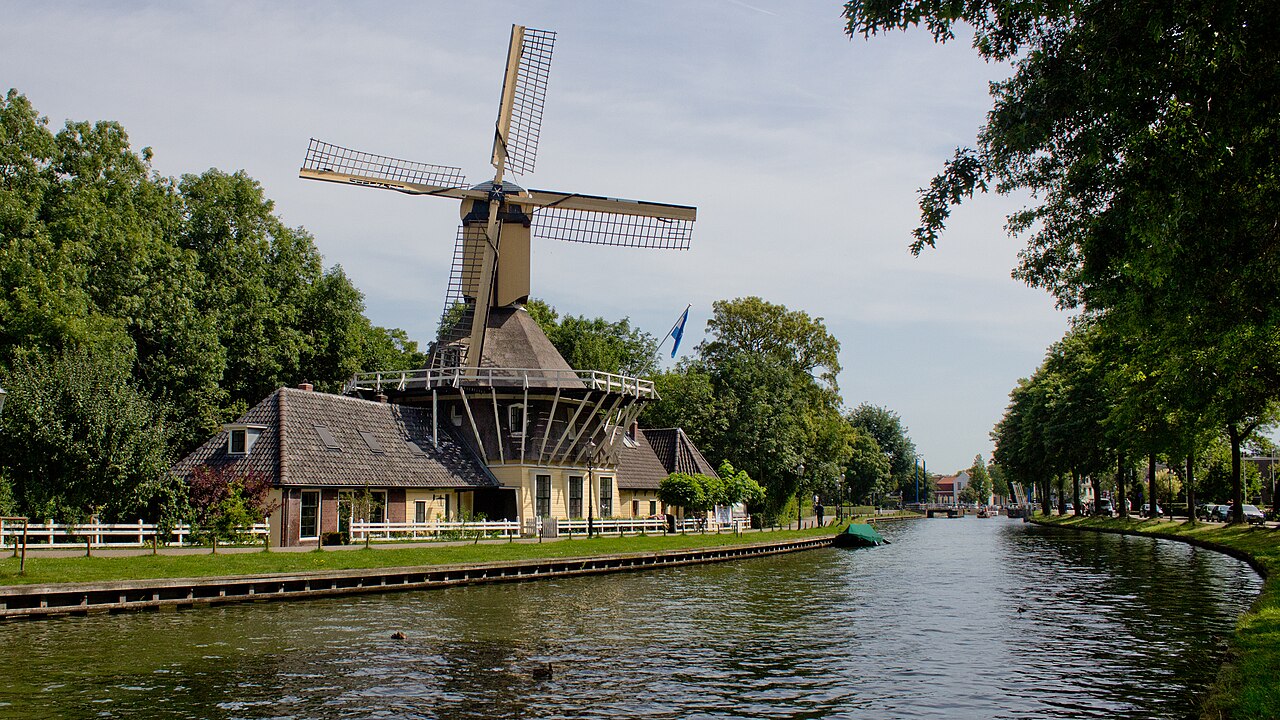
Environments for Aging: the Dutch village of Hogeweyk for people with dementia, or Pescueza, an oasis for older adults in Extremadura
Traducir artículo
¿Quieres un resumen de este artículo?
People with dementia who walk alone down the street, go to the bar for a coffee, shop at the supermarket, exercise, have dinner with their “housemates,” or even smoke a cigarette — even if it’s not healthy — on an outdoor terrace. What might seem like a utopia is an everyday scene at The Hogeweyk, a neighborhood in the town of Weesp, on the outskirts of Amsterdam, which over the past thirty years has become an international model of long-term care for people with dementia. Its founder, Eloy Van Hal, has recently been in Barcelona, as part of the Wemind International Forum on longevity, neurological health, and mental health, explaining the philosophy and trajectory of the project.
Today, 188 residents live there, distributed across 27 houses that operate as true living units. Each one has two professionals: one caregiver and one person dedicated to household tasks. Seven residents share a home, meals, after-meal conversations, and daily experiences. The organization structured around four different lifestyles — urban, traditional, formal, and cosmopolitan — ensures that no one has to adapt to ways of living that feel foreign to them. The decoration in each home, the type of furniture, and even the meals follow the designated lifestyle. One example: in traditional homes, potato stews are common; in more urban or cosmopolitan homes, pasta or dishes from other cultures appear more frequently. “They don’t choose what to eat every day, but it’s discussed,” Van Hal explains. Caregivers talk with residents, may add something extra, and above all, avoid rigid schedules. Each person has breakfast whenever they want and joins activities at their own pace, although lunch and dinner are maintained as shared moments — just like in any family.
The model did not arise from a theoretical laboratory but from long experience showing that the quality of life of people with dementia in The Hogeweyk is noticeably superior to that in traditional facilities. Fully integrated into the Dutch public health system, it was born from deep dissatisfaction with the classic institutional model. “It wasn’t what you would want for your mother, your father, or for yourself,” summarizes Van Gal. This realization is what pushed the team to rethink everything.
Three decades ago, they worked in an institutional building with big rooms and long corridors. There, they launched a pilot that brought everyday life back: small houses, shared household tasks, homelike decoration, and activities that required moving around the space and meeting others. The change was immediate: less stress, less agitation, more well-being. That experience led to a radical decision: replacing the “hospital” with a neighborhood.
Today, The Hogeweyk is conceived as a community structured around small homes, grouped to generate a sense of familiarity. Van Gal is not enthusiastic about the term “dementia village,” even though it’s often used. He prefers to keep the focus on people, not on the disease. And he rejects the image of a staged set like the one in The Truman Show adapted for people with dementia. No. The supermarket, the bar, and the common spaces are not sets — they are real places where life happens, open to family members, friends, and also visitors, with prior reservation and appointment.
Van Hal’s thesis, as he tells me, is clear: people with dementia care about the same things as anyone else. Noise in crowded common rooms, overcrowding, schedules that go against their natural rhythms, or lack of privacy worsen behaviors that are often attributed to the disease, when in fact they are responses to the environment. That is why he advocates a human-centered approach, with flexible routines, stable caregivers, and family participation. And he warns against idealization: living in small groups does not eliminate conflict, but it makes it more manageable than in large institutions, where tensions escalate. Looking ahead, Van Gal believes that building new facilities is not enough. Europe needs a diverse range of solutions, he says, as well as stronger community support so people can stay at home as long as possible — and an acceptance that living, even in old age and illness, involves accepting certain risks. “The medical model cannot solve everything,” he states.
In Spain, Pescueza, a small village in Extremadura, has become a reference point in elderly care — though by a very different path: it did not originate from a public initiative but from the community itself. In 2011, a group of residents created the association Amigos de Pescueza to prevent their oldest neighbors from having to move into a nursing home. The result is a singular model that combines a day center, a small residence, home-care services, and active aging programs. There are no patients or users there — only neighbors who decide how they want to live their old age, from schedules to daily activities, maintaining identity and social ties. The project, managed entirely by volunteers, is based on person-centered care and absolute respect for individual will.
The entire village participates: ideas are proposed, decisions are voted on, and support is given to those who need it. For many, like resident Herminia or deputy mayor Luis Martín, this model means living active, accompanied, and with a sense of belonging. The community has transformed Pescueza into a true “village-residence,” with adapted services, a designated zone to make walking easier for older adults, activities designed for them, and a solidarity network ensuring that no one ages alone. The initiative, awarded for its social innovation, shows that old age can be a stage of fulfillment and that caring is a shared responsibility.
In Miradas de la Longevidad, we have already explored other housing alternatives for old age. More and more people are asking themselves where and how they want to live their final years. New senior-living models — colivings, collaborative housing, next-generation residences, or self-managed communities — combine autonomy, companionship, and care, and are attracting growing interest.
Experts such as Adelina Comas-Herrera, director of the Global Observatory of Long-Term Care at the London School of Economics — one of the most authoritative voices in this field — stress the need to invest in accessible, high-quality care. Among the most innovative residential models, the Centre Geriàtric de Lleida and the “Como en casa” project by the Matia Foundation stand out, as they recreate homelike environments and promote active, engaged daily life.
Thinking about how we want to age — even when cognitive decline enters the picture — is an exercise in autonomy that should be protected by public policy. And it is also a family responsibility: to anticipate, talk, and decide before urgency shapes the path. In the end, both Hogeweyk and Pescueza show that there is no single valid model, but there is a common premise: the right environment radically transforms the experience of aging. Everyday life, social bonds, respect for privacy, and the ability to make day-to-day decisions turn care into something more human, supportive, and positive.
¿Quieres que te recomendemos más artículos en base a tus lecturas anteriores?