
¿Quieres un resumen de este artículo?
Longevity has expanded time, but it has not resolved the end. It has displaced it, medicalized it, filled it with silences. And there is something profoundly human that continues to be left out of that conversation: the possibility of dying as one wish.
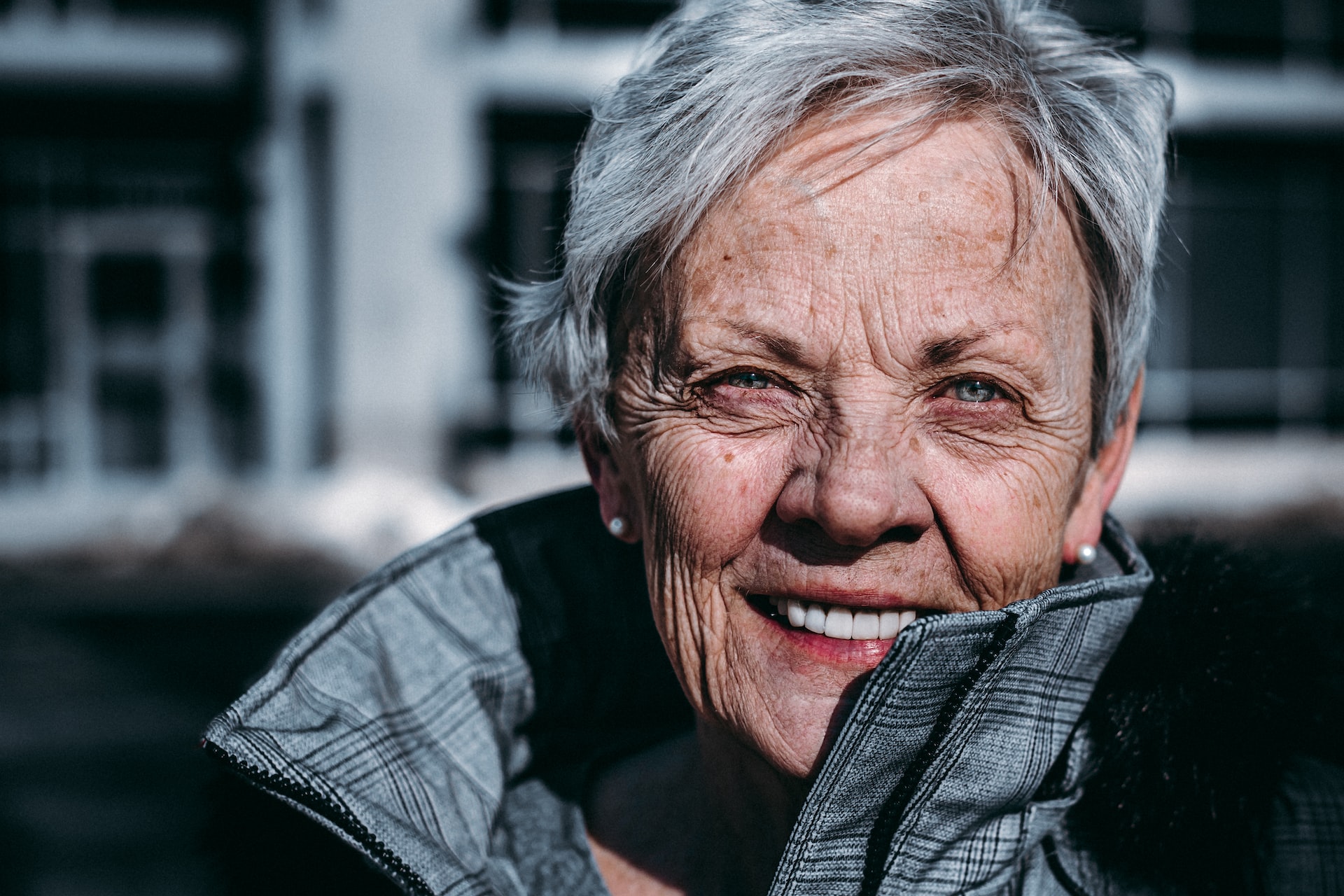
Marisa Rodríguez is 82 years old and has metastatic cancer with no option for curative treatment. Born in Galicia, she emigrated to Barcelona at 16, lost her mother at 15, a son to an overdose, and her husband when grief became unbearable. And now she lives in Sant Feliu de Llobregat with her son José, accompanied by the PADES home palliative care team.
It could be just another story. But Marisa does not speak like someone who is saying goodbye. She speaks like someone who knows what she wants.
“I don’t want them to hook me up to machines. I don’t want them to prolong my life, if I am no longer myself.”
For decades, medical progress has been measured in terms of survival. More years, more treatments, more possibilities. But increasingly, that logic finds a limit. What happens when continuing to prolong life stops making sense for the person living it?
“I have lived a lot. I don’t need more time at any price.”
There is no resignation in that sentence from Marisa. There is hierarchy. And that hierarchy is exactly the heart of palliative care: not curing when it is no longer possible but caring in another way. Sustaining life with dignity, relieving suffering, accompanying. And yet, we continue to arrive late to that conversation.
Marisa has everything prepared: will, advance directives, clear instructions. She wants a secular farewell, without ceremonies, without flowers. And she wants the money that others would spend on the funeral to be donated to cancer research. “I would like my death to serve some purpose.”
But here a tension appears that runs through many stories like hers. When her condition worsened and she stopped eating, social services intervened and she ended up living with her son, although it was not what she had chosen. She wanted to live alone. It was her decision.
This conflict — between protecting and respecting — is one of the great dilemmas of contemporary longevity. To what extent do we respect a person’s will when it involves risk? Where does care end and the substitution of their decision begin? There are no simple answers. But there is one certainty: living more years without being able to decide how to end them opens up a new form of vulnerability that the system still does not really know how to manage.
Faced with that silence, however, spaces are beginning to emerge that try to return death to the place from which it should never have left: shared life. Because talking about dying well is not a task only for doctors. It is a conversation that belongs to the whole community.
One of those spaces is The Cycle of Existence, promoted at the La Marina Civic Center in Barcelona by Dr. Ylenia García Navarro, a family physician and head of the Well-being and Development area in the Primary Care Management Office of Baix Llobregat. There were five sessions. Five ways of looking at what few dare to look at.
The first session addressed the biology of dying: fears, ways, what happens when one resists. The second explored accompaniment — with a conclusion that is disconcerting in its simplicity: to accompany is, in the end, to do nothing. To be there. The third was a dialogue between a physician and a philosopher. The fourth brought together different cultures around their rituals before death: India, Morocco, the Roma community, Latin America. The fifth, with Dr. Arráez, entered into the most difficult dimension to name: consciousness. What perhaps does not disappear. That more metaphysical part of what death is.
But perhaps the most important thing was not the content. It was the gesture. Sitting down to talk about death in community. Recovering that tribal consciousness in the face of something as democratic and inevitable as dying.
That same perspective lies at the foundation of the work of the Metta-Hospice Foundation, which starts from a simple idea: dying is not only a clinical process. It is an essential stage of life that also needs to be accompanied. A diverse group of professionals — health care and non-health care professionals — works with a common purpose: to be beside people in that passage. To accompany without invading. To support without imposing. And also, to care afterward, in grief, with a particular emphasis on the spiritual dimension: not necessarily religious, but as that human need to find meaning when everything else wavers.
Training in that kind of accompaniment is, deep down, relearning something that for centuries was natural: how to be there when someone leaves.
Marisa does not speak of death with fear.
“I am not afraid of it. I know it.”
She has seen her husband die, her son, people from her neighborhood. Death is not an idea. It is experience. And perhaps for that reason, when she looks at her life, she does not speak of achievements or of time.
“Affection. That is what remains when everything else goes away.”
In a society obsessed with prolonging life and optimizing the body, this statement shifts the focus to another place: the quality of the bond. What we give. What we receive. What remains.
There is a phrase that runs through Marisa’s entire story: to keep going. She said it when she emigrated at 16. She said it when she found her son dead. She says it now, with a diagnosis with no way back and with the peace she feels.
“Let them fight. Let them never give up. Things always pass. And the only way for them to pass is to continue.”
Her aunt used to say that death is a tango and life a pasodoble, and that each person dances it as it falls to them. Marisa has danced with losses, with emigration, with grief, with illness. And she continues dancing. As a way of living.
In that “continuing” there is something more than resistance. It is her way of being alive, even when everything is ending. And there is an enormous lesson: dying well begins long before dying. It begins when we decide how we want to live. And when we dare to say it out loud.
¿Quieres que te recomendemos más artículos en base a tus lecturas anteriores?