
Fashion and Longevity: The Aesthetics of an Extended Life
Traducir artículo
¿Quieres un resumen de este artículo?
Fashion has always spoken about time… but almost never about the passage of time. For decades, the aesthetic imagination has associated beauty with youth, vitality with smooth skin, and elegance with a kind of perfection without history. But today’s long-lived societies —and even more so those of tomorrow— demand a different aesthetic: one that recognizes age not as a flaw but as a language.
Fashion, understood as a cultural expression, plays a decisive role in how we look at longevity. And also, in how we look at ourselves as we age.
The Aesthetic Invisibility of Old Age
On the runways, for years, age seemed to have only one direction: disappearance. Eternally young models, wrinkle-free skin, bodies with no trace of experience. A suspended time.
But that narrative no longer corresponds to social reality. Today, in Spain and Portugal, more than 20% of the population is over 65, and many lead active, cultivated, and diverse lives. Yet their visual presence in fashion has been minimal, as if aesthetics had no room for an extended life.
This invisibility is not innocent: it feeds ageism, reinforces the idea of obsolescence, and pushes millions of people toward a sense of aesthetic irrelevance.
The question is: who decides which bodies deserve visibility?
When Fashion Opens Its Eyes
In the last decade, signs of change have begun to appear. Houses such as Céline, Balenciaga, and The Row have incorporated models in their 60s, 70s, and 80s into their campaigns. Icons like Carmen Dell’Orefice —at 92— or Maye Musk have shown that beauty is not the exclusive property of youth.
In photography, artists such as Ari Seth Cohen (creator of the Advanced Style movement) have portrayed old age as an explosion of identity, originality, and freedom. And in Portugal and Spain, independent fashion editorials are beginning to include long-lived bodies to narrate a more honest and broader aesthetic.
This is not about doing “fashion for seniors,” but about expanding the visual conversation so that the real world can see itself reflected.
When fashion includes all ages, culture begins to breathe.
The Aesthetics of Experience
Fashion has an extraordinary ability to turn the personal into the public, the individual into a symbol.
And here a powerful idea emerges: longevity does not only change the body —it also changes style.
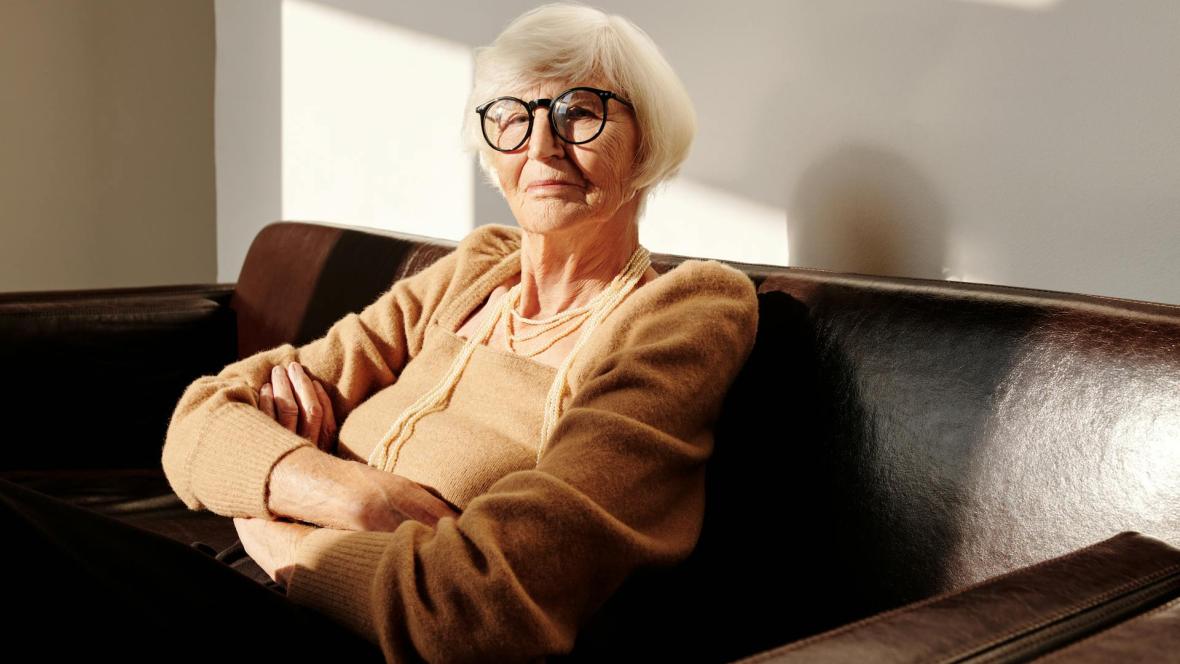
Wrinkles tell stories.
White hair can be a declaration of presence.
A slower gesture can transmit more strength than an athletic body.
The aesthetics of experience is deeply political: it asserts that time lived is value, not deterioration.
In long-lived societies, fashion has both the responsibility —and the opportunity— to show that age does not erase beauty; it simply transforms it.
Clothes That Accompany Life
Aging also means changing one’s relationship with the body. Functional fashion, comfortable footwear, fabrics that adapt, garments that facilitate movement… all of this is not concession, but intelligent design.
The best brands of the future will be those capable of uniting aesthetics and accessibility: beauty that respects the body rather than punishes it.
This means thinking about magnetic closures for arthritic hands, soft seams for thinner skin, realistic sizing, and colors that harmonize with the complexion at any age.
Inclusive fashion —the real kind— is not a trend; it is a form of respect.
The Runway as a Political Space
It may sound exaggerated, but it isn’t: fashion is a political space.
What is seen becomes legitimate; what is not seen disappears.
When campaigns show only young bodies, the message is subtle but forceful: old age is not aspirational.
When they show long-lived bodies enjoying style, design, and presence, they crack open stereotypes.
Fashion can be an ally in the fight against ageism. It can normalize the aesthetic diversity of long-lived societies. It can remind us that style has no expiration date.
The Aesthetics of the Future
The cultural shift we need does not depend solely on discovering new garments or new trends, but on changing how we look. Fashion —like all human creation— is not immune to social transformation: it responds to it and sometimes anticipates it.
If we understand longevity as opportunity —and not as loss— fashion can become one of the most fertile territories for imagining that future. A future where style has no age, where beauty is plural, and where time lived does not diminish value but multiplies it.
The aesthetics of tomorrow will not consist in hiding the passage of time, but in dressing it with dignity, creativity, and authenticity. It will be a visual language capable of recognizing all trajectories, all biographies, and all ages as legitimate parts of public life.
Because perhaps the true aesthetic revolution of the 21st century is not reinventing fashion but reconciling it with the extended life we already are.
What image would you like to see more often in the fashion of the future: the youth we’ve always seen, or the real diversity of ages we already are?
¿Quieres que te recomendemos más artículos en base a tus lecturas anteriores?