
On the Need for Others to Age Well
Traducir artículo
¿Quieres un resumen de este artículo?
These days, a certain stir has been generated in the wake of announcements and proposals—still under debate—about limiting the use of social media among boys and girls under 13 years of age and introducing restrictions on the use by those between 13 and 16.
Without getting into evaluating the measure itself, the discussion has led me to ask myself about the value—if it has any—of this form of virtual sociability in boys and girls in the midst of development. Is it useful? Does it contribute anything significant? Does it improve or, on the contrary, hinder their personal and social development? Are social media a healthy context for understanding what community is and how interdependence works? The question seems especially pertinent to me in the context of a society whose members seem to be increasingly distant from one another and, if I may, also from themselves.
The role played by digital social relationships, with their alternative dimension and, in many cases, addictive dimension, goes beyond the scope of this post. Even so, I would like to point out a paradox that runs through our time: in a context of constant hyper connection, the experience of community seems to be fading. We feel more connected than ever, but much more alone, less accompanied.
A society is something more than the simple sum of individuals: it requires relationship. Life—autonomy as well—is sustained by bonds. It may sound paradoxical, but there is no possible autonomy without others. We have learned to value independence as an absolute virtue, almost as a synonym of freedom (whatever that may be), and along that path we run the risk of forgetting something essential: there is no possible human life without others. The “I” cannot exist without others.
The human being is, by nature, a social being. We are born completely dependent, in need of care, food, and affection. Later, that need changes, but it does not disappear we continue to need recognition, listening, even physical contact that reminds us that we belong, that we are part of a “we.” And this need (with adaptations and nuances) will continue throughout our entire life cycle. We are—even in our autonomy—interdependent beings.
Even if we sometimes get tired of others, even if we believe we could “be enough” in our “self-sameness,” life reminds us again and again that we depend on the bond.
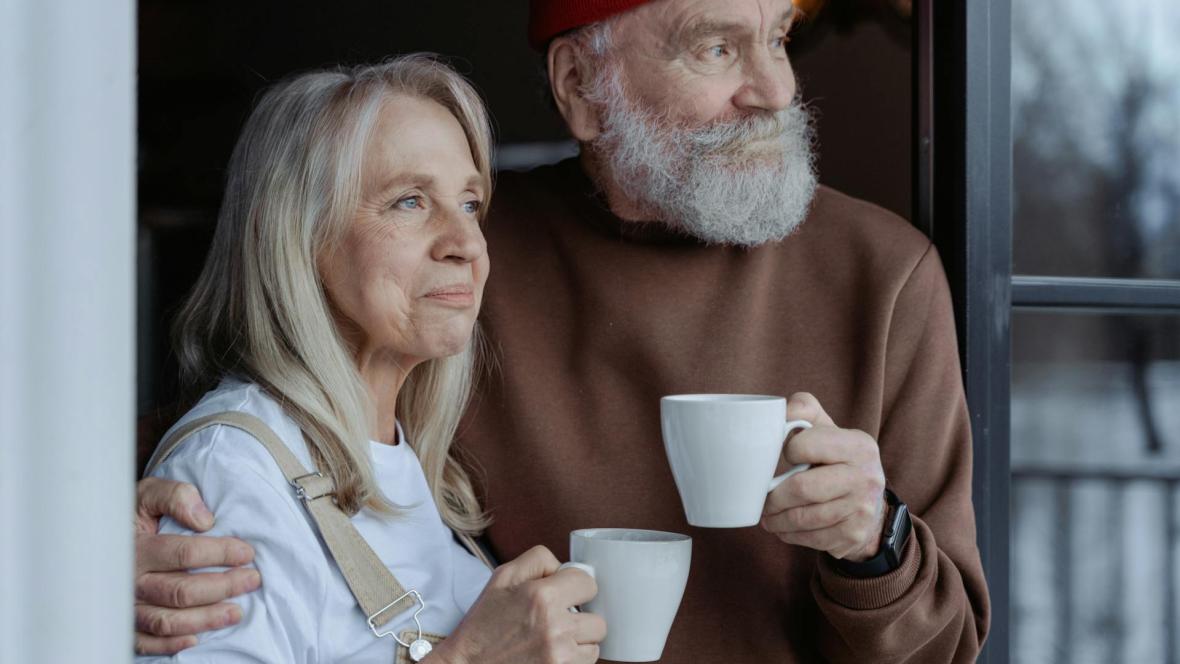
That evidence (simple and uncomfortable, many times) often becomes especially visible with force in old age. Not so much because aging makes us more fragile (or not only), but because the passage of time makes that fiction of total and absolute self-sufficiency less sustainable; we need to support one another. The margin to do without others shrinks when we face everyday life.
Aging, in reality, does not consist only of having birthdays, but has a lot to do with learning—sometimes by force—that dependence on others is not a weakness, but a human condition. And, in reality, that is fine. Being is in the “we.”
However, when we talk about aging, we almost always do so from an external gaze. People talk about “older adults” as if it were an alien category, as if aging were a biological phenomenon that happens to others, far from us (does that mean we become “the others” when we age?). We forget that aging is not an individual condition, but a collective experience that runs through the whole society and all the individuals who are lucky enough to survive the passage of time.
Aging, as a natural consequence of living, should in reality unite us (the present of some, the future of others, if we are fortunate) and not the opposite; intergenerational confrontation lacks, in my view, any sense at all. Forgetting that the old of today are the young of yesterday and that the young of today will be the old of tomorrow is to deny the meaning of the life cycle.
Understanding aging as a social issue implies recognizing that the conditions for living well in old age cannot be established only in the private sphere, but in the bonds, we weave among all. In the way we organize time (times) in society, in the value we give to reciprocity, in how we care and establish the frameworks that make it possible to care and to age under conditions of quality, in the creation of a common welfare system that makes possible the dignity of all the people who make up a society. Interdependence is not weakness, but the invisible fabric that sustains the possibility of freedom, of existence, of survival.
Aging (and the possibility of doing so) should help us look at that fabric with other eyes. The passage of time (of our own time) shows us that bonds are not a luxury, but vital infrastructure. It reminds us that health, joy, and identity itself depend to a great extent on feeling that we are part of something: a family, a neighborhood, a community. That is why the way dominant discourses on longevity tend to reduce it to figures and to a need for quantification (monetary, mainly) associated with risk and collapse repels me enormously. As if the fact of living more years were enough, by itself, to speak of progress.
But gaining years is not enough if we do not gain in bonds, in their quality and in their legitimacy. The welfare state is nothing other than the legitimacy of those bonds. A society can be long-lived and, at the same time, profoundly lonely. It can celebrate its medical advances and continue failing at what is essential: offering a sense of belonging, shared spaces, meaningful relationships, and community.
Interdependence is not decreed: it is built. It is cultivated in everyday gestures, in the willingness to listen, in the capacity to make room for the other, and in the desire to sustain the well-being of others, in addition to one’s own. A community is not measured by the number of people who make it up, but by the degree to which each person can count on the others. This, I insist, is also the safeguarding of the welfare state and of the public policies that improve life. That is why aging should concern us not only as a demographic challenge, but as a test of social maturity. A society that knows how to age is one that recognizes that all of us, without exception, need others in order to sustain ourselves.
¿Quieres que te recomendemos más artículos en base a tus lecturas anteriores?