
On Old Bodies and the Need to Please
Traducir artículo
¿Quieres un resumen de este artículo?
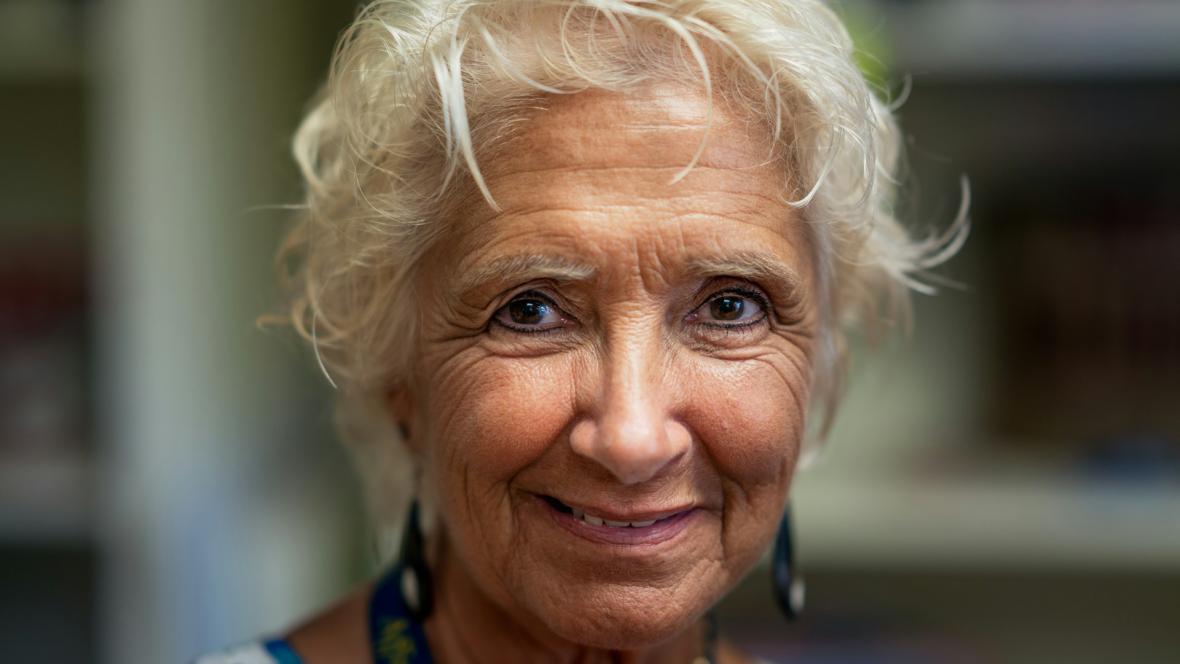
The desire to please others, to be loved just for existing, can become an unbearable burden. For some people, being considered “nice” will be that great stone that marks the day-to-day, preventing them from becoming happy people if they are not loved from the moment, they enter a room and triggering their insecurities to harmful limits for themselves and for those around them. The need to please strangers can dominate life and interfere with one’s relationship with oneself. This need to please can take different forms, the most common and visible being the need for our physical appearance (the first impression) to be pleasing to any gaze. And that weighs heavily.
With old age, the fear of not pleasing takes on another tone. It is stronger in women than in men, and it is also harsher, more difficult for the former; we see it in movies, in advertising, on social media, where the ideal of the mature man, with his gray hair and wrinkles of wisdom, represents an added bonus. Women, on the other hand, seem to lose points with each passing day. Recently I saw a post on Instagram where men of nonexistent attractiveness criticized Pamela Anderson’s appearance because of her age and refusal to wear makeup. They criticized the passage of time. I do not know these men’s need to please, but they certainly did not care about “being nice” in that space. The feelings of the woman being criticized, undoubtedly, neither.
Age seems to be a key factor in this matter of pleasing and is very much associated with physical attractiveness. When men can stipulate their ideal age in potential romantic (or sexual) partners, they focus on ages much younger than their own; thus, a study from okCupid pointed out that men tend to send messages more frequently to younger women than themselves, even ignoring women their own age and even more so if they are older than them. Socially it is not so frowned upon if they are the “mature” ones; intergenerational marriages/relationships (and indeed they are, since even within marriage there is intergenerationality, though the concept jars us) do not cause us as much commotion when the older one is the man. Think of relationships such as George Clooney and Amal Alamuddin, or Clint Eastwood and Dina Ruiz. It does not surprise us as much; it does not receive as much attention. At the same time, we can recall how infinitely Cher or Madonna were ridiculed for having an interest in younger lovers or, in our homeland, Sara Montiel for marrying a man 35 years younger than her. Bertín Osborne will be criticized (they will criticize him) for many things, but not for dating younger women.
This has a very broad, profound meaning, but part of it lies in the value associated with the body and age, the age of the body we inhabit. The feeling, mine (which may not be shared, of course), is that the dissociation between body and self (who you are, how much you are worth to others when we are objectified) is greater in women. Perhaps it is the opposite; it is much smaller, because it is assumed that a worn-out body equals a worn-out person, of no value. Dispensable, even. The body thus becomes a kind of inert matter, disenchanted, and therefore malleable at will, so that cosmetic surgery becomes acceptable and, in some circles, even required. I wrote about this some time ago (here).
Since here socioeconomic class matters and impacts, and even demands from us differently, in the case of women aging in more disadvantaged environments the demand is not for surgery but for “invisibility” or a greater demand for behavioral adaptation to that externally imposed age. That is: dyeing their hair certain colors, clothes, attitude, even, must conform to what we consider proper for an “older lady,” which means limiting the way of acting, appearing, being. They are not allowed to “go astray” by wearing a miniskirt no matter how fabulous their legs may be. Even if those legs are so fabulous that they can support us and carry us to faraway mountains, which is, in the end, what we can demand from legs in order for them to be fabulous. What we forget about bodies is that they do not have the function of looking or pleasing the outside, but of supporting who we are, the inside.
In short: the female body has eternally been a faded shell, dispossessed in reality (or available for possession by others. Several debates come to mind about this) and in old age it is, moreover, a space to move away from. If women have always felt distanced from our bodies, in old age that distance can become infinite. Then there are the wise women, who are fed up with arguing with their bodies and decide to make peace at advanced ages, dye their hair pink (or not dye it) and that’s it, over. Queens, these, infinite.
¿Quieres que te recomendemos más artículos en base a tus lecturas anteriores?