
Technology as an invisible walking stick: when it supports without replacing human care
Traducir artículo
¿Quieres un resumen de este artículo?
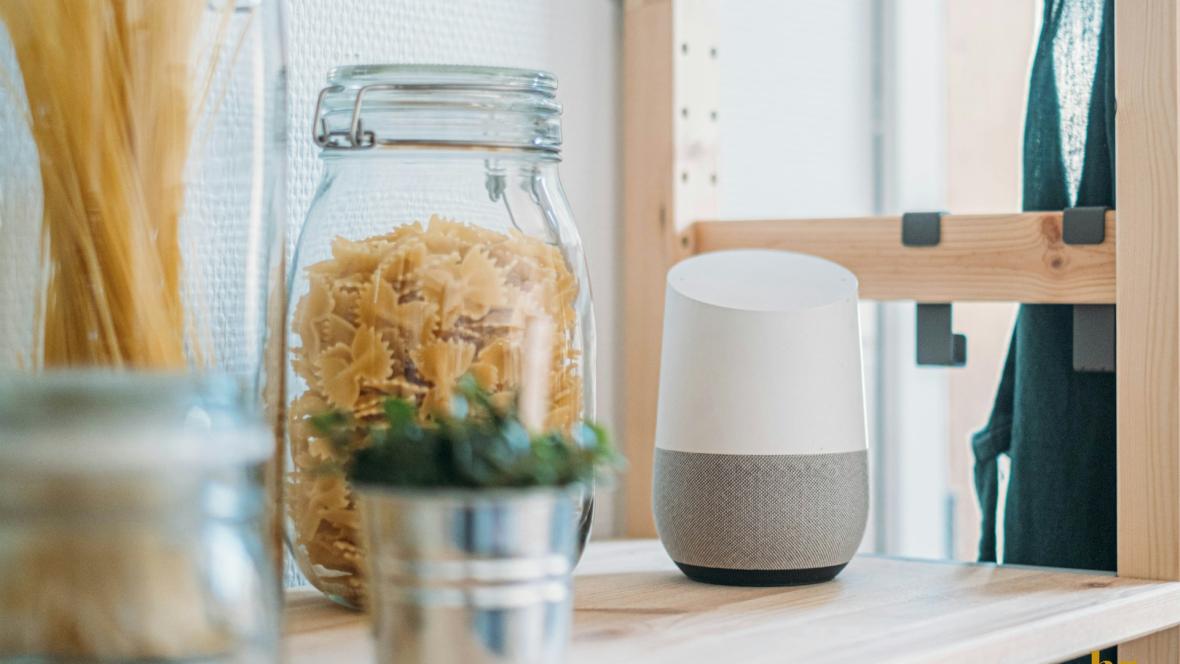
For Pili Puyo, an 82-year-old resident of Barcelona, her voice assistant — Alexa — is, at certain moments of the day, something like a roommate. She has been living for four years with one of her daughters, her son-in-law and her two grandchildren. But when the house falls silent and everyone goes about their own routines, Pili does not feel completely alone. “What’s the weather going to be like today?”, “What time is it?”, “Play some music for me,” she asks her assistant. Sometimes it is simply a way of marking the rhythm of the day, of orienting herself, or of breaking the silence.
Pili is blind. She began losing her sight more than ten years ago, and it was not easy. Over time, the support of her family and the everyday use of different technologies have allowed her to have a life that is far fuller than she herself might have imagined at the beginning. The voice assistant is just one of her supports. She also wears a telecare pendant to ask for help if something happens while she is alone at home. And her mobile phone — her daughter Laura says — “is constantly smoking”: she spends a couple of hours a day talking with friends. At night, the radio remains a fixed ritual; voices keep her company when the day comes to an end.
Technology has had, and continues to have, other presences in her life. Before losing her sight, Pili was enthusiastic about video game consoles and entertained herself with calculation games. After suffering a stroke a year ago, she had a cardiac chip implanted, connected to the hospital and capable of detecting anomalies in real time. Hearing aids, moreover, marked a clear before and after in her daily life. “Before, she couldn’t hear well, she made up answers and ended up isolating herself in conversations,” her daughter explains.
This is the story of a woman with health problems that complicate everyday life, but that have not taken away either her autonomy or her desire to continue living well. And it is also a good example of how some technologies can function as an invisible walking stick: they are not seen, but they help one move forward more safely, providing physical or perhaps psychological support.
Some studies
In recent years, several studies have begun to put data on the table. A team of researchers at the Universitat Oberta de Catalunya (UOC) reviewed studies focused on the use of voice assistants and unwanted loneliness. In most cases — around 85% — the use of these devices was associated with a clear reduction in feelings of loneliness. “The use of voice assistants in everyday life can have a positive impact on the psychological well-being of older adults,” noted Elena Castro, a researcher at the Behavioural Design Lab of the UOC’s eHealth Center.
Psychologist Sacramento Pinazo-Hernandis has also emphasized this idea from another angle. In her work on technologies that support care and daily living, she stresses that tools such as home automation or artificial intelligence applied to health can make it easier for many people to age in their own homes for longer. That said, she offers a clear warning: they work when they are integrated into a network of support, not when they are used to replace it.
Acceptance and risks
There is no single reason why an older person accepts or rejects a digital tool. Biography, environment, support, life stage all plays a role… And, above all, whether that technology fits — or does not fit — into the life that already exists. When it works, technology reduces anxiety. Not only for the person who uses it, but also for those around them. Many older adults accept these devices not so much to take better care of themselves, but to avoid becoming a constant concern for sons and daughters who live far away or arrive home late.
When used well, technology does not invade but rather lightens the load and allows unwanted decisions — moving, leaving one’s home, institutionalization — to be postponed, helping to sustain autonomy a little longer. It does not eliminate risks or make grand promises. It simply accompanies.
That said, it is important not to lose sight of the limit. The temptation to replace human presence with devices exists. Sensors do not replace visits; alarms are not equivalent to a conversation. This is not Pili’s case, as she lives surrounded by a very present family, but it may well be the reality of many older people who age alone.
Technology does not care. Care comes from relationships, bonds, and community. Devices can alert, facilitate or prevent, but they cannot listen or understand. When they are used as substitutes for care, they cease to be a help and become a more sophisticated form of isolation. But when they accompany well, they provide autonomy. That is their true value in an era of increasing longevity: allowing people to continue being who they are, for a little longer.
¿Quieres que te recomendemos más artículos en base a tus lecturas anteriores?