
¿Quieres un resumen de este artículo?
This summer I travelled to Japan, and it made me think deeply about how we want to live, but also about how we want to grow old.
For three weeks I explored Tokyo, Kamakura, Hakone, Kyoto, Nara, Osaka, Naoshima and Yokohama. I expected to find temples, gardens, overflowing cities and a culture very different from our own. What I didn’t imagine was that the trip would end up becoming a constant reflection on longevity.
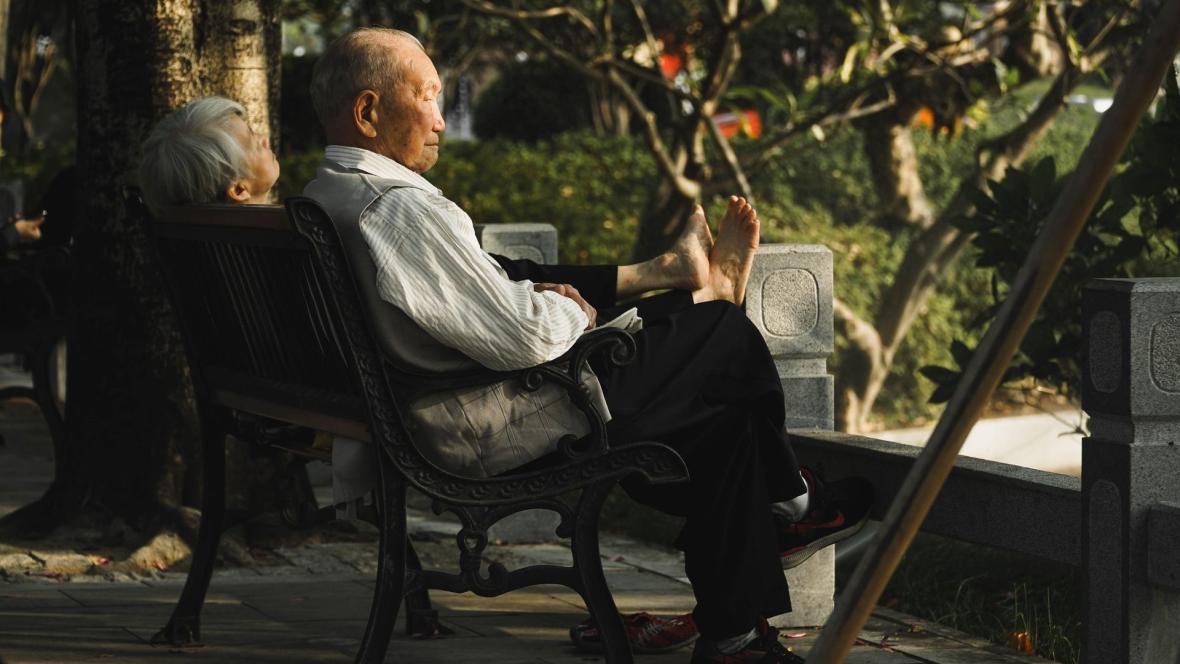
Japan is one of the most aged countries in the world. The presence of older people is visible in the streets, in shops, in public transport and in everyday life. I saw elderly men and women working in small stores, running restaurants, cleaning stations, tending gardens, working as security guards or walking alone through immense cities. They didn’t appear removed from life, but rather fully part of it.
And that led me to ask myself a question: what can we learn from Japan to build a longevity that isn’t just about living more years, but about continuing to feel useful, cared for and connected to others?
A society where others are present
The first thing that moved me was people’s attitude. Kindness, a smile and a willingness to help appeared in the most ordinary gestures. Even when we didn’t share a language, someone always emerged willing to accompany us, guide us or try to understand what we needed.
This respect for others is also felt in the silence of public transport, in the care of shared spaces and in a way of behaving that seems constantly aware that our actions affect those around us.
Longevity doesn’t depend solely on individual decisions. We need communities we can trust, where we feel recognised and where we know that, if one day we need help, someone will be there.
Continuing to have a purpose
In Japan I met many older people who continued to work and participate actively in their community. One of them was Yuko, an 83‑year‑old woman who still runs Narcissus, a small jazz kissaten in Shinjuku that has been open since 1978.
In her café, Yuko personally selects each vinyl and places it with an almost ceremonial delicacy. You don’t go there simply to listen to music: you enter the universe she has built over decades and still shares with others.
As I watched her, I thought of ikigai, that Japanese concept we often translate as “reason for living” or what makes life worthwhile. It doesn’t have to be a grand mission. It can be opening a small business every morning, preparing a recipe, tending a garden, chatting with customers or passing on a passion to those who come after.
Naturally, we shouldn’t idealise working into advanced age. Sometimes it stems from economic necessity rather than choice. But there is an important difference between being forced to keep working and being able to continue contributing because society still recognises our knowledge and experience.
Perhaps one of the keys to longevity is precisely that: not losing our place in the world.
The care of small things
Another thing that surprised me was the cleanliness. Public toilets, even in stations or very busy places, were so spotless that it was astonishing to find them in spaces used daily by thousands of people.
But that cleanliness wasn’t only about hygiene. It spoke of respect, responsibility and attention towards those who would use the space afterwards. The same dedication appeared in the way an object was wrapped, a meal presented, a shop arranged or a garden maintained.
In Japan, care becomes visible in the attention, delicacy and respect with which each small gesture is carried out.
Perhaps that’s why the country invites us to think that a good life is also built from small repeated gestures: preparing with care, cleaning after use, leaving a place slightly better than we found it, not invading someone else’s space.
These are simple actions, but they create environments that convey safety and serenity. And the environment also shapes how we live and age.
Cooking as a form of care
In Japan, cooking can become an artistic expression. I watched chefs prepare each dish slowly, with precision and deep respect for the ingredient, the technique and the person who would receive it.
Food didn’t seem conceived merely to satisfy hunger. There was beauty in the presentation, attention to the seasons and a delicate balance of colours, textures and quantities. Each dish conveyed knowledge, hospitality and respect for detail.
In our accelerated societies, eating has often become a mere task. In contrast, watching someone who has spent years perfecting a single gesture reminds us that food can also be a bond.
Cooking for someone is saying, without words: I took time to care for you.
Death close to life
I was also struck by the coexistence of different spiritual traditions. Shintoism and Buddhism intertwine in daily life without that combination being experienced as a contradiction. A single walk can take you from a Shinto shrine to a Buddhist temple, and from a celebration linked to birth to a ritual dedicated to ancestors.
In cities like Tokyo or Kyoto I found cemeteries integrated into neighbourhoods, located next to temples, homes and busy streets. They weren’t relegated to a space completely separate from daily life. They were quiet places where families went to remember and honour those who were no longer there.
That closeness made me think that talking about longevity also requires talking about death.
In the West we often try to hide it, as if not looking at it could keep it away. But the awareness that life ends doesn’t have to lead to sadness. It can also help us ask how we want to live the time we have.
Japanese cemeteries seemed to me, in that sense, places to remember the dead but also to reflect on life.
Nature also teaches us how to live
In Japanese gardens, nature is not a mere decorative element. Each stone, tree, path and stream seems designed to create an experience of contemplation.
Vegetation enters temples, accompanies homes and appears even in the middle of large cities. The gardens don’t seek to dominate nature, but to dialogue with it and condense a landscape into a small space.
Walking through them forces you to slow down. Your gaze rests on the moss, the movement of water, the shape of a branch or the light filtering through leaves. And that attention changes, even for a few minutes, your perception of time.
Nature doesn’t just beautify. It regulates, calms and reminds us that we are part of a cycle much larger than ourselves.
Living longer, but also living better
Japan is not a perfect model nor a simple answer to the challenges of ageing. Its extraordinary longevity coexists with serious problems: loneliness, depopulation, work pressure and the enormous challenge of sustaining a society with a growing percentage of older people.
But travelling also means observing other ways of living and returning with new questions.
From Japan I bring back the importance of keeping a purpose, continuing to participate in the community and caring for the spaces we share. I bring back the beauty of slow gestures, respect for nature and a relationship with death that doesn’t expel it entirely from life.
Above all, I return convinced that longevity doesn’t depend only on medical advances, diet or exercise. It is also built in relationships, in the environment, in the way we look at older people and in the opportunities we give them to continue contributing.
¿Quieres que te recomendemos más artículos en base a tus lecturas anteriores?